




An unfinished basement featuring a forced-air furnace, exposed wooden ceiling joists, bare concrete walls, and miscellaneous items including cardboard boxes and coiled cables on the floor.

Furnace Maintenance in Mohall, ND

Tell us about the job

Takes about a minute. No obligation.

Tune-up, service, or cleaningFurnace or heatingRenville County, ND
Step 1 of 2

What ZIP code is the job in?

Furnaces in Renville County start working in September and don't let up until May. That's nine months of straight use. August is the month to get yours looked at, right before the load hits. A technician can catch a weak igniter or a cracked heat exchanger while the furnace is still sitting idle, instead of after it's been running flat out for weeks. Wait until September and you're booking the check at the same time the furnace is already working hard.

Nine months of heat means this furnace barely gets a break.

A furnace that runs September through May wears its parts down sooner than one that sits idle most of the year.

Half the homes in Renville County were built by 1973

Half the homes here were built by 1973
Heat runs September through May
Winter nights average 3°F

Get the furnace checked before September, not after. Once the overnight lows start dropping toward that 3 degree average, the furnace is running most of the day and night to keep up, and that's not when you want a technician finding a worn igniter or a cracked heat exchanger. A maintenance visit before the season starts catches those parts while the furnace is off and there's time to fix them. Wait until January and the same problem means no heat on a night that cold.

A furnace this old is worth checking every year

A lot of furnaces in Renville County date back to 1973 or earlier. If yours is one of them, or you're not sure how old it is, a yearly check is how you find a worn igniter or a weak heat exchanger before it leaves you without heat.

Find a contractor
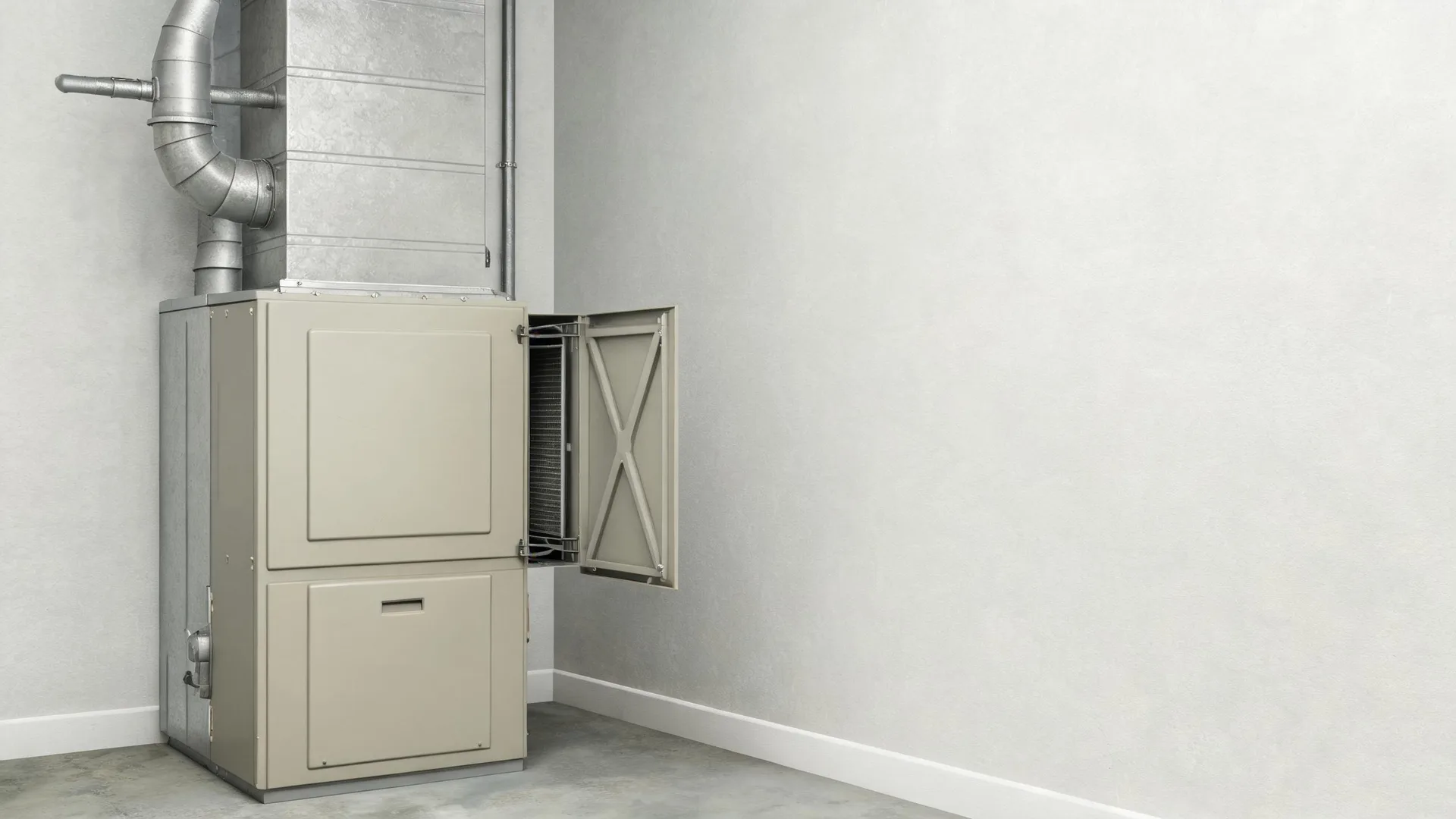
A gray residential gas furnace installed in an unfinished basement, connected to sheet-metal ductwork and PVC pipes.

Skip the check and the furnace tells you later, when it's worse

A furnace that never gets looked at still runs. It runs right up until the part that was already failing finally gives out. Dust builds up on the burners and the flame sensor over time. A dirty flame sensor will eventually stop reading a flame that's actually there, so the furnace shuts itself down. The igniter wears the same way, a little more with every cycle. Nobody knows it's close to done because it still glows. It just glows a little less each time, until one day it doesn't get hot enough to light the gas. A blower motor that never gets oiled or cleaned has to work harder to push the same air. A motor working harder runs hotter, and a motor running hotter wears out before it should. None of this shows up as something you can see or hear coming. The furnace works fine, and then it doesn't.

The heat exchanger cracks from the inside

A heat exchanger can split in a spot you'd never see without pulling the furnace apart. A technician checks it with a camera or a mirror, looking for the hairline crack that lets exhaust mix with the air your furnace is heating. From the outside the furnace looks and sounds the same either way.
Gas pressure drifts without anyone touching it

The pressure feeding the burners can creep up or down over time, even if nobody's adjusted anything. Set wrong, the flame burns uneven, the burners get hotter or cooler than they should, and the heat exchanger wears faster than it would otherwise. A gauge on the gas valve is the only way to know it's off.

Between visits, the filter is the one thing worth your attention. A dirty filter chokes airflow, and a furnace starved for air runs its heat exchanger hotter than it was built to. Check it every month the furnace is running and swap it when it's gray, not black. Keep the area around the furnace clear too. It needs room to pull in air, and boxes or stored stuff stacked against it block that. If you have a carbon monoxide detector near the furnace or in the hallway outside it, test the battery while you're at it. Beyond that, leave the burners, the igniter and the gas valve alone. Those are a technician's job, not because the furnace is fragile, but because getting them wrong is how people get hurt.

A tune-up covers the parts that cause the trouble already described above. The technician pulls the burners and cleans them, since built-up dust and soot change how evenly the flame spreads across each one. The flame sensor gets cleaned or tested for how well it still reads a flame. The igniter gets checked for the hairline cracks or the weak glow that mean it's close to the end, not just whether it still lights. The blower motor and its wheel get checked for dirt buildup and, if it needs it, oil on the bearings. Gas pressure gets set to the number the furnace was built to run at, not left to whatever it's drifted to. The heat exchanger gets inspected with a camera or mirror for the crack you can't see from outside. None of this takes the furnace apart to do. It's the difference between a furnace that's been looked at and one that's just been running.