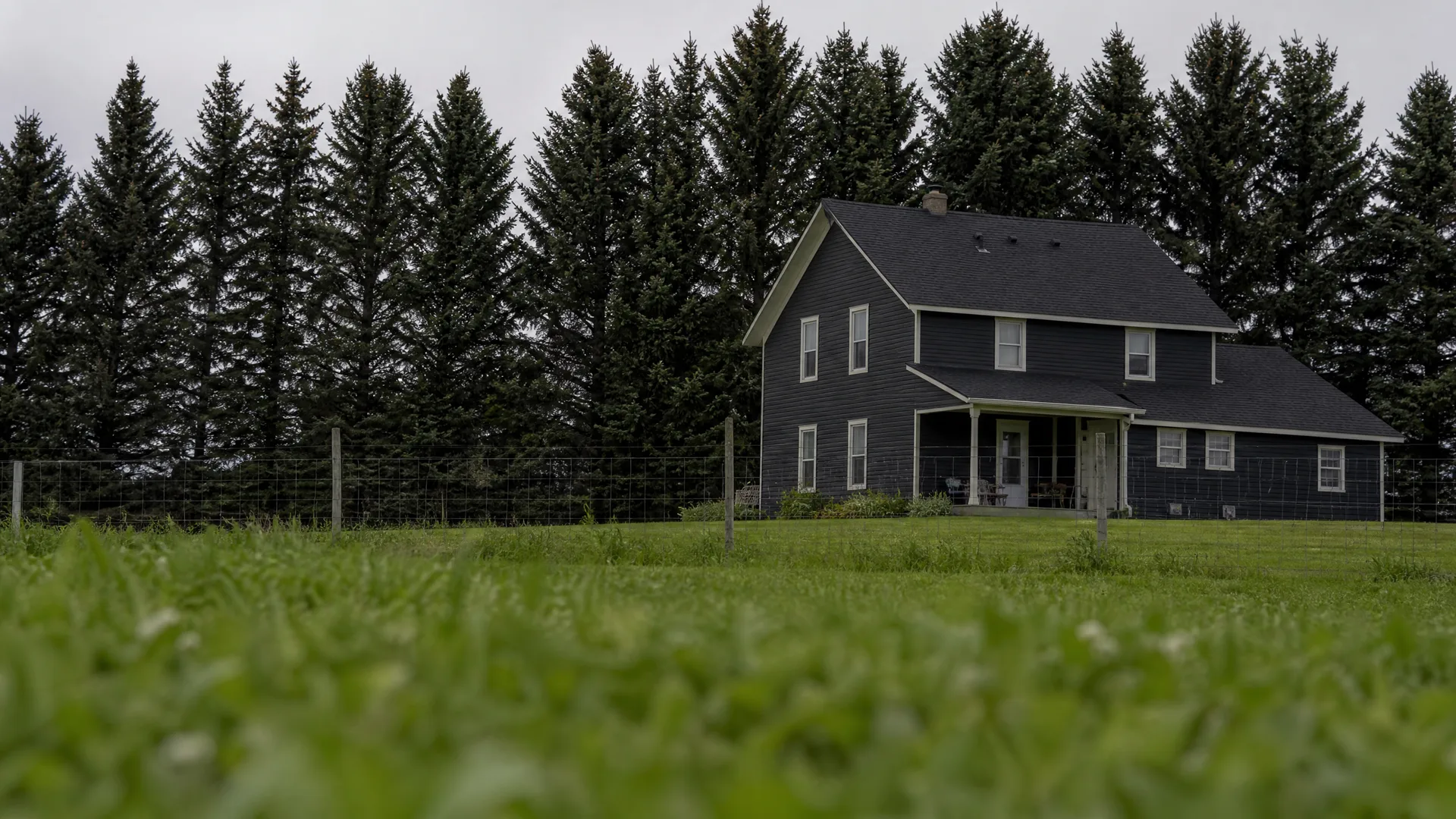
A dark grey two-story house with a porch stands in front of a row of tall evergreen trees, behind a wire fence and a blurred green grass field under an overcast sky.

Furnace Maintenance in Bowman, ND

Tell us about the job

Takes about a minute. No obligation.

Tune-up, service, or cleaningFurnace or heatingBowman County, ND
Step 1 of 2

What ZIP code is the job in?

Ten months of runtime

A furnace in Bowman County runs from September through June. That leaves a short stretch in summer when it sits idle. The rest of the year it cycles on and off most days, and that kind of use adds up on the igniter, the blower motor and every moving part inside the cabinet.


Trouble shows up early

With a furnace running this much of the year, a worn part does not wait quietly. A cracked igniter or a failing blower motor tends to fail right when the cold sets in and the furnace is leaned on hardest. Checking it before that stretch catches the wear while it is still small.

Furnace season in Bowman County starts in September.

Get the tune-up done in August, before the first cold night puts the furnace to work.

Half the county heats with gas, and gas heat means more to check

50% of homes heat with gas
Climate zone 6A
Heat runs September through June

Half the homes in Bowman County were built in 1972 or earlier. A furnace that old has been replaced at least once, maybe twice, but the ductwork and gas line it runs on are often whatever came with the house. Older duct runs leak more air than new ones, and a gas line that has sat for decades is worth a look along with the furnace itself. None of that shows up by looking at the thermostat. A yearly check is what catches a cracked heat exchanger or a loose duct joint before it costs you heat on a cold night.

A furnace this busy is worth checking before September

A furnace that runs this much of the year wears its igniter and blower motor down faster than one that gets more rest. A tune-up now catches that wear while it is still a small fix, not a cold night without heat.

Find a contractor
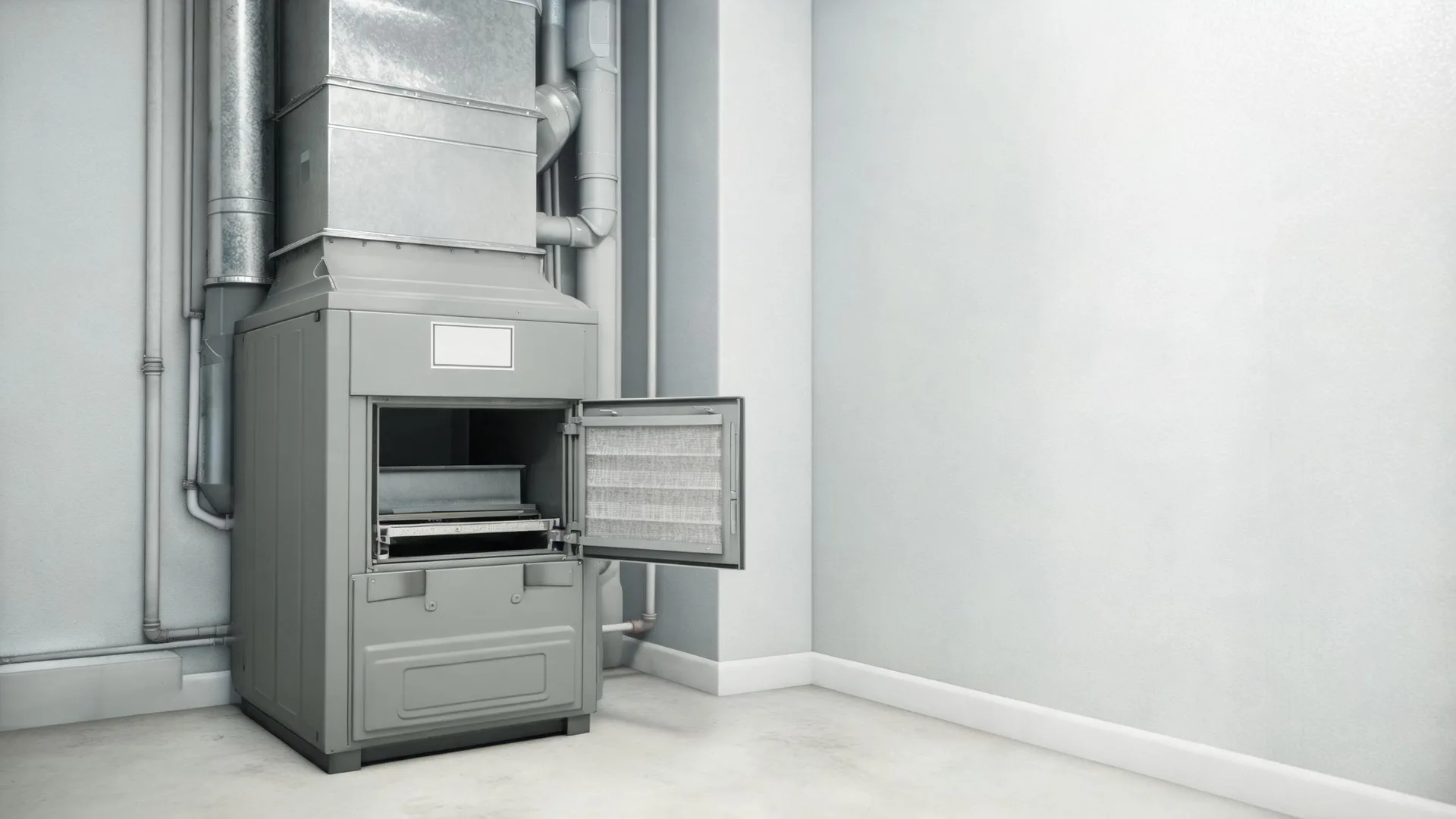
A gray residential gas furnace installed in an unfinished basement, connected to sheet-metal ductwork and PVC pipes.

One visit a year, on a schedule like this

If your furnace has been swapped out since the house was built, the ductwork and gas line underneath it probably haven't been. A yearly check is what puts eyes on those parts along with the furnace itself, instead of waiting for a cold morning to find out something's wrong. Put it on the calendar for the same month each year and it stops being something you have to remember to do.

The burner tells on itself

A burner flame should burn steady and blue. One that flutters, burns yellow, or pulls away from the burner head is telling a tech something about airflow or a dirty orifice before it ever trips a limit switch or shuts the furnace down. From the living room, the flame is hidden behind a panel and a glance at the thermostat tells you nothing about it.

The heat exchanger has to be opened up to check

A cracked heat exchanger can run for a long time before a homeowner notices anything wrong, and by the time there's a smell or a headache that won't go away, it's not a small fix anymore. Checking it means pulling the panel and looking at the metal itself, with a light and sometimes a camera, not watching how the furnace runs. That's the part of the job a homeowner can't do standing at the register.

A furnace doesn't have coils or a drain. Those belong to the air conditioner sharing the same cabinet, and the only thing the furnace shares with it is the blower and the ductwork. What the furnace does have is a filter sitting in the return, and that filter matters more than people think. A clogged filter starves the burner compartment of airflow, and a furnace that can't move enough air runs hotter than it should inside the heat exchanger. That heat has nowhere to go but back into the metal, and metal that heats and cools under strain cracks sooner than it would otherwise. Swapping the filter before the season starts is the cheapest thing that protects the most expensive part of the furnace.

Gas in North Dakota ran $8.44 per million Btu last year, and that price tag matters more here, where the furnace runs most of the year, than it would somewhere it barely gets used. A furnace that's drifted out of tune asks for more gas to hit the same number on the thermostat. A dirty burner or a clogged filter does the same thing, quietly, without tripping anything that would tell you. Over a winter this long, that difference adds up on the bill instead of staying a rounding error. A tune-up gets the burner flame and the airflow back to where the furnace was built to run, so the gas it burns is tied to the weather outside and not to a part that's slipping.