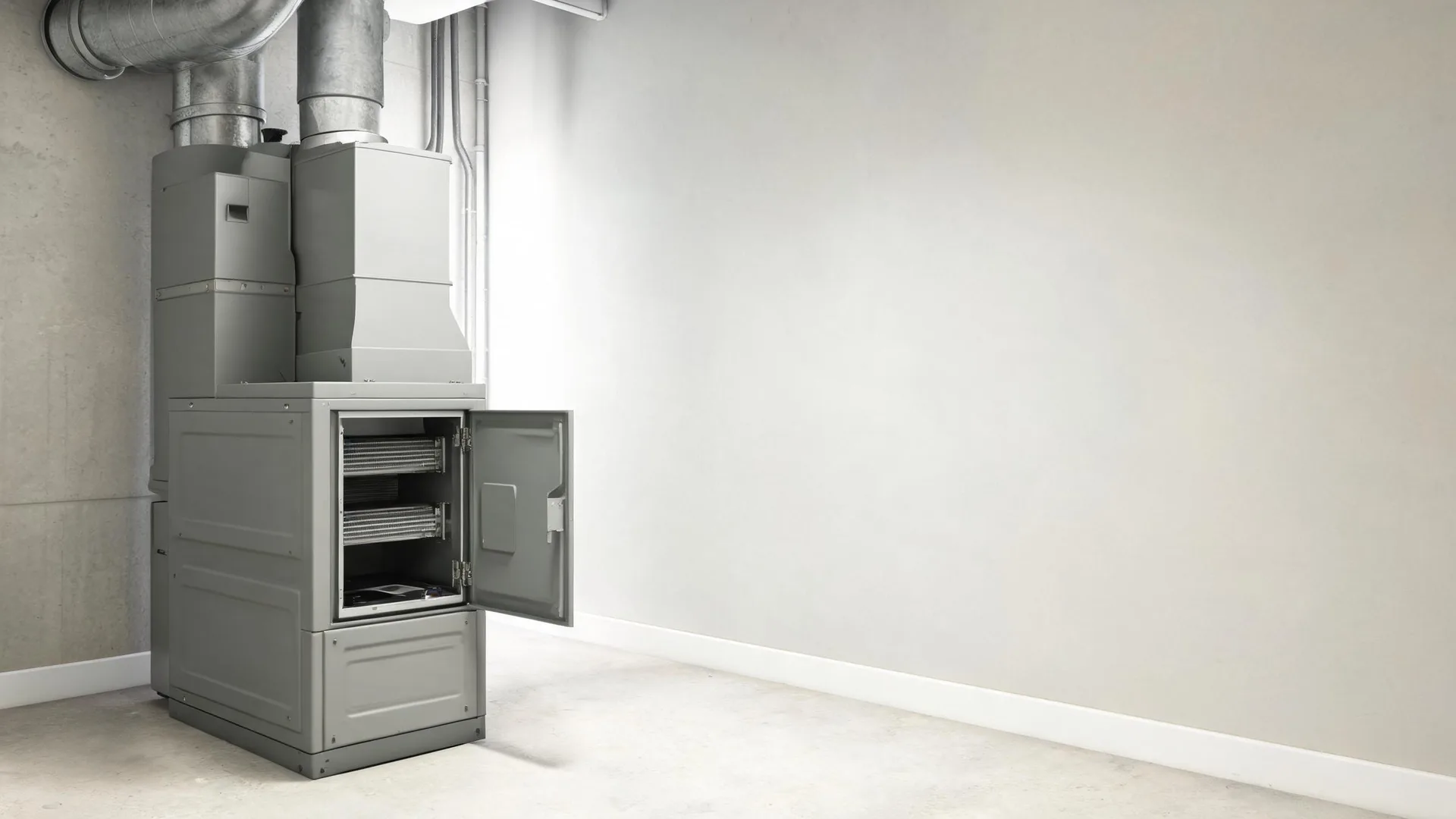
An unfinished basement featuring concrete block walls, exposed floor joists, and a metal forced-air furnace with ductwork near a central pillar.

Furnace Installation in Watford City, ND

Tell us about the job

Takes about a minute. No obligation.

New system or replacementFurnace or heatingMcKenzie County, ND
Step 1 of 2

What ZIP code is the job in?

Electricity here runs $33.73 per million Btu

North Dakota pays more for power than most of the country, and that number comes straight from state energy data for 2024. A furnace that wastes heat is spending more of your money doing it here than it would somewhere cheaper.

Efficiency is the lever you have

You can't change what power costs in this state. What you can choose is a furnace that turns more of that expensive energy into heat instead of losing it. On a bill that's already higher than average, that difference is worth paying attention to.

9 months
September through May, your furnace is on duty
7°F
the average winter night it heats against
80% AFUE
the federal minimum any new unit must meet
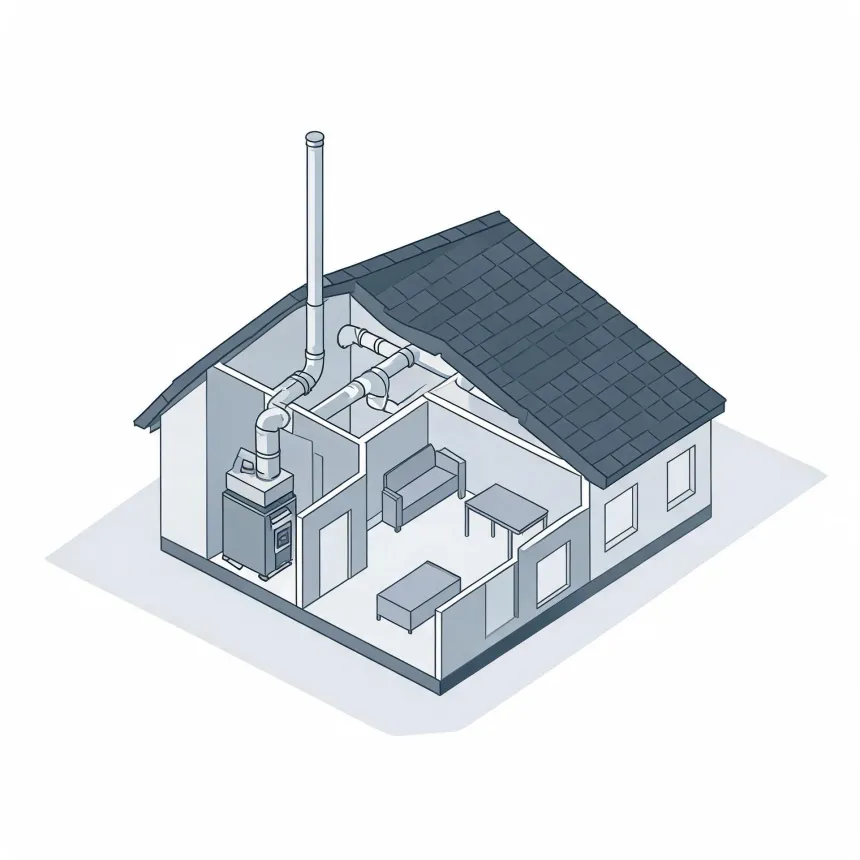
Isometric line illustration of a cutaway single-story house with a shingled roof, showing an interior furnace connected to ductwork and a tall vertical flue pipe, plus simple furniture in the adjacent room.
Your furnace works hardest from November through March.

NOAA nClimDiv, 1991–2020 normals

Electricity heats 60.1% of homes in McKenzie County, more than gas and propane combined.

Most furnace installs here go electric, so that's the system to plan and budget around.

Nine months of heat a year means August is the month to replace it, not September

Heat runs September through May
Winter nights average 7°F
Climate zone 6A
Nine months of winter a yearOvernight lows average 7°F in McKenzie County from December through February.

Ask what the AFUE rating actually is, not just whether it's 'high efficiency.' That number tells you how much of every unit of fuel turns into heat in your house versus going out the flue. Ask what size unit they're proposing and how they got that number. A furnace sized off square footage alone is a guess. A contractor who runs a load calculation is pricing the house you actually have. Ask what the warranty covers on the heat exchanger versus everything else, because those are often different lengths. And ask what happens to the existing ductwork. A new furnace moving air through ducts that were sized for the old one won't perform the way the brochure says it will.

The furnace you install now sets your electric bill for years

When a furnace is going in anyway, the AFUE rating is the number that decides what every winter after this one costs you. Ask for it before you settle on a unit.

Find a contractor
A gray residential gas furnace installed in an unfinished basement, connected to sheet-metal ductwork and PVC pipes.

Nine months of heat a year means there's no room to guess on size

Nine months a year, this furnace runs. That's a long stretch for any unit to carry, and it leaves no room for a size that's wrong in either direction. A unit too small can't keep up when that 7°F overnight low settles in. One too large cycles on and off more than it should, and that short-cycling wears on the parts that start it up each time. The way to get the size right is a load calculation done on this house, not a guess based on square footage. Ask whoever you're hiring to run one.

AFUE tells you what's lost up the flue

The rating is a percentage of fuel that becomes heat in the house. The rest leaves through the flue as exhaust. A furnace with a higher rating wastes less fuel doing the same job, every single cycle it runs.

The gas furnace still needs a power cord

Even a high-AFUE gas furnace runs on electricity for the blower motor, the control board and the igniter. The combustion is gas. The air moving through your ducts is electric. A furnace rated high on paper still has an electric bill attached to it.

Whoever installs the new furnace should be able to tell you where the old one goes and what happens to the fuel line or power feed behind it. If it's a gas furnace coming out, the gas line gets capped off properly, not just left behind a panel. If it's electric, the dedicated circuit feeding it either gets reused for the new unit or gets disconnected at the panel. A flue or vent pipe that served the old furnace needs to be sealed or removed too, since an open vent is a path for air to leak in or out of the house. None of this is the hard part of the job, but it's the part that gets skipped when someone's in a hurry. Ask how they handle the old unit's hookups before they start, not after.

Installation day starts with the old furnace coming out. That takes longer than people expect, since the gas line or power feed has to be dealt with properly before anything new goes in. The old ductwork gets checked too, so it can tie into the new unit the right way. Once the new furnace is set in place, it gets connected to the ducts, the gas line or electrical circuit, the condensate drain if it has one, and the thermostat wiring. Then comes startup and testing. A contractor should fire the unit, check the gas pressure or electrical draw, verify the temperature rise across the heat exchanger, and confirm the blower is moving the right amount of air through your ducts. A furnace tested and left running correctly on day one stays that way for years. One that's just bolted in and switched on is the one that gets a service call by winter.