






A gray forced-air furnace with sheet-metal ductwork stands in an unfinished basement with exposed wooden joists, concrete walls, and a hanging incandescent bulb.

Furnace Installation in Valley City, ND

Tell us about the job

Takes about a minute. No obligation.

New system or replacementFurnace or heatingBarnes County, ND
Step 1 of 2

What ZIP code is the job in?

Electricity in North Dakota ran $33.73 per million Btu in 2024. That number matters when you're picking a furnace, because every degree of efficiency you buy upfront is a degree you're not paying for every month the furnace runs. A furnace with a higher AFUE rating costs less to run than one with a lower rating, same as any other state, but here the gap between them shows up faster on your bill. If you're comparing a couple of models, look past the sticker price and ask what each one burns to heat the same house.

9 months
September through May, your furnace is on duty
3°F
the average winter night it heats against
80% AFUE
the federal minimum any new unit must meet
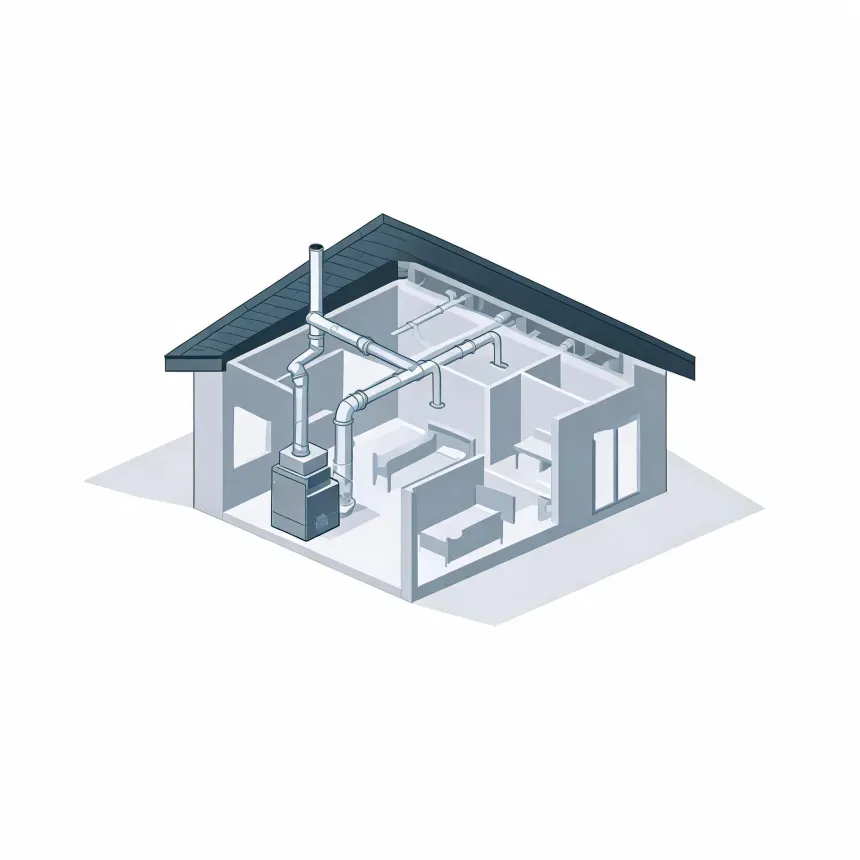
Isometric cutaway illustration of a small single-story house showing interior rooms, a furnace unit with a flue, and connected ductwork running below the dark gabled roof.
Your furnace works hardest from November through March.

NOAA nClimDiv, 1991–2020 normals

Furnaces in Barnes County run nine months a year, September through May.

Size this install for a system that can hold up through that whole stretch, not just the cold snaps.

Half the homes in Barnes County were built in 1966 or earlier

Half the homes here were built by 1966
Heat runs September through May
Winter nights average 3°F
Have heat ready before SeptemberFurnaces here run September through May. August is the month to get this done.

That overnight average of 3°F in December, January and February is doing real work on the furnace you pick. Get the sizing wrong and it shows up on the coldest night, not the mild ones, when the unit can't keep up and runs flat out anyway. Get it wrong the other way, too big for the house, and it short cycles through the milder stretches of that nine month run, which wears the parts that start and stop the most. A contractor who sizes off a load calculation for your house, not a guess based on square footage, is the one worth hiring here. Ask what number they used and how they got it.

Most homes here heat with electricity. Replacing yours with the same keeps this simple.

Close to half the furnaces in Barnes County run on electricity, more than any other fuel. Gas is next, then propane. If your old furnace burns electricity, replacing it with the same keeps the hookup, the venting and the breaker you already have. That's one less thing to work out before this one goes in.

Find a contractor
A man in a cap, dusty dark shirt and work pants walks up stone steps toward a dark navy front door, carrying a worn canvas tool bag, with a potted shrub beside the entry.
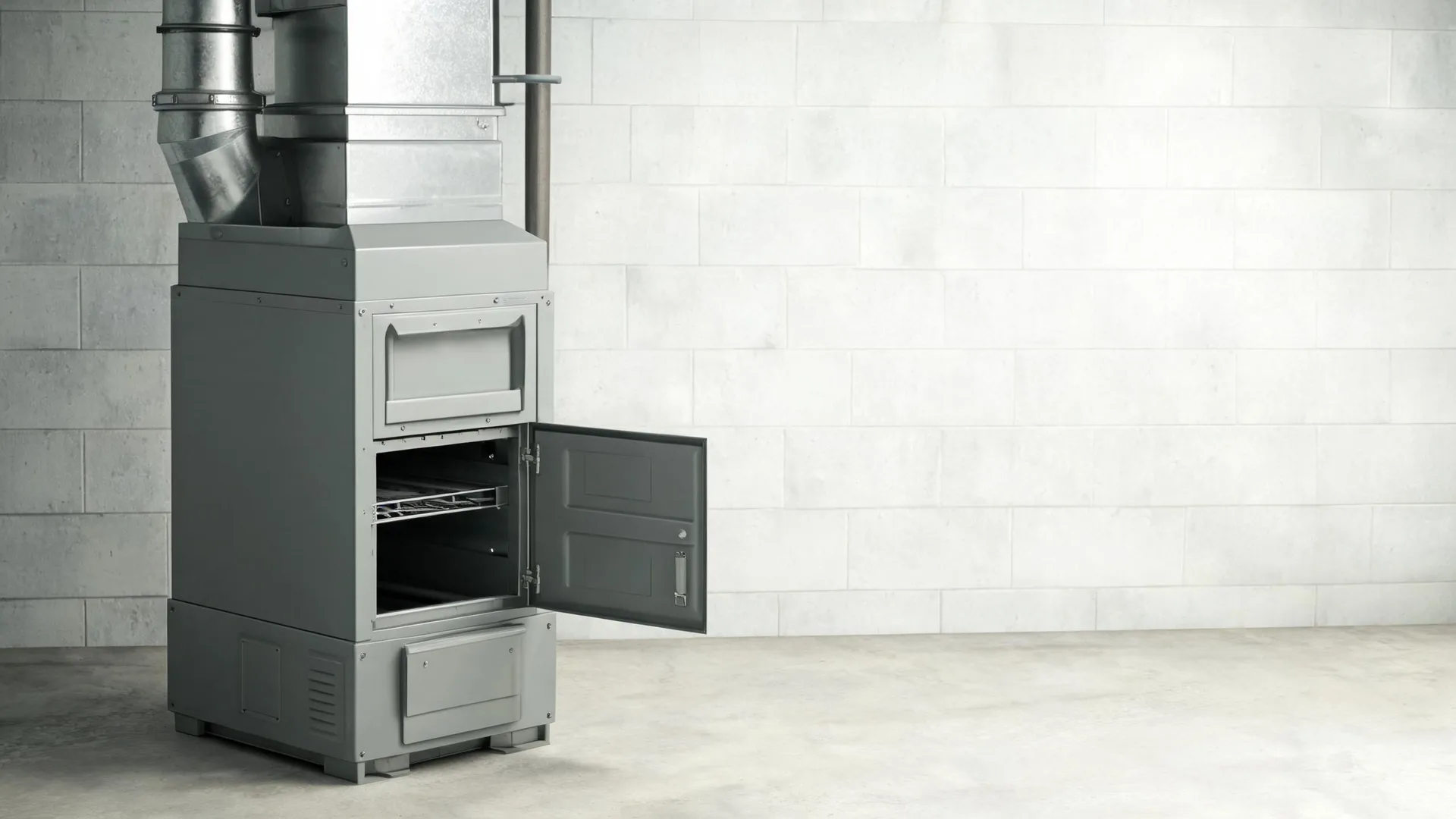
A gray high-efficiency gas furnace installed in an unfinished basement, surrounded by gas lines, a condensate drain, and sheet-metal ductwork.

Size the new furnace to the house you have

Half the homes in this county were built in 1966 or earlier. If yours is one of them, the contractor sizing this job needs to look at what's already there, the ducts, the gas line or breaker, the venting, not just match whatever the old furnace was rated for. Ask them to size off your house, not the model year on the unit coming out.

Ask what AFUE rating each model carries

The AFUE number tells you how much of the fuel a furnace burns actually turns into heat for the house, and how much goes out the vent. Furnaces that look alike on paper can still burn different amounts to put out the same heat. Ask for that number on every model you're comparing, not just the one the contractor recommends.
Ask how they're sizing it, not just what size they picked

A contractor should be able to tell you what load calculation they ran and what it came back with, not just name a tonnage. If they can't explain how they landed on that number, they probably matched it to the old unit instead of your house. That's the question that tells you whether the size they're proposing actually fits what you have.

A load calculation is the only way to know what size furnace a house actually needs. It weighs the square footage against the windows, the insulation, the ceiling height, how the rooms connect, and comes back with a number in Btu. Skip that step and a contractor is just guessing, usually by matching the old furnace or eyeballing the square footage, and both leave you with the wrong size more often than the right one. Too big and the furnace blasts the house to temperature and shuts off, so it never runs long enough to heat evenly or wear in the way it's built to. Too small and it runs constantly trying to catch up, pushing the blower and the burner harder than they're meant to work. The right size runs in long, steady stretches, which is both the sign it's sized correctly and the reason it lasts.

Installation day starts with the old furnace coming out, along with whatever venting or ductwork won't work with the new one. The contractor runs gas or checks the electrical hookup, sets the new unit, and connects it to the ducts and the vent. Then comes the part that decides whether this furnace runs well for years or fights the house the whole time. Static pressure gets tested. Gas pressure gets checked. Airflow gets measured at the registers. A furnace can be sized right and still run poorly if the duct connections leak or the blower speed isn't matched to the house. Before the contractor leaves, they should fire it through a full cycle and walk you through the thermostat, the filter, and what the startup sounds and smells like so you know what's normal in the first few days.