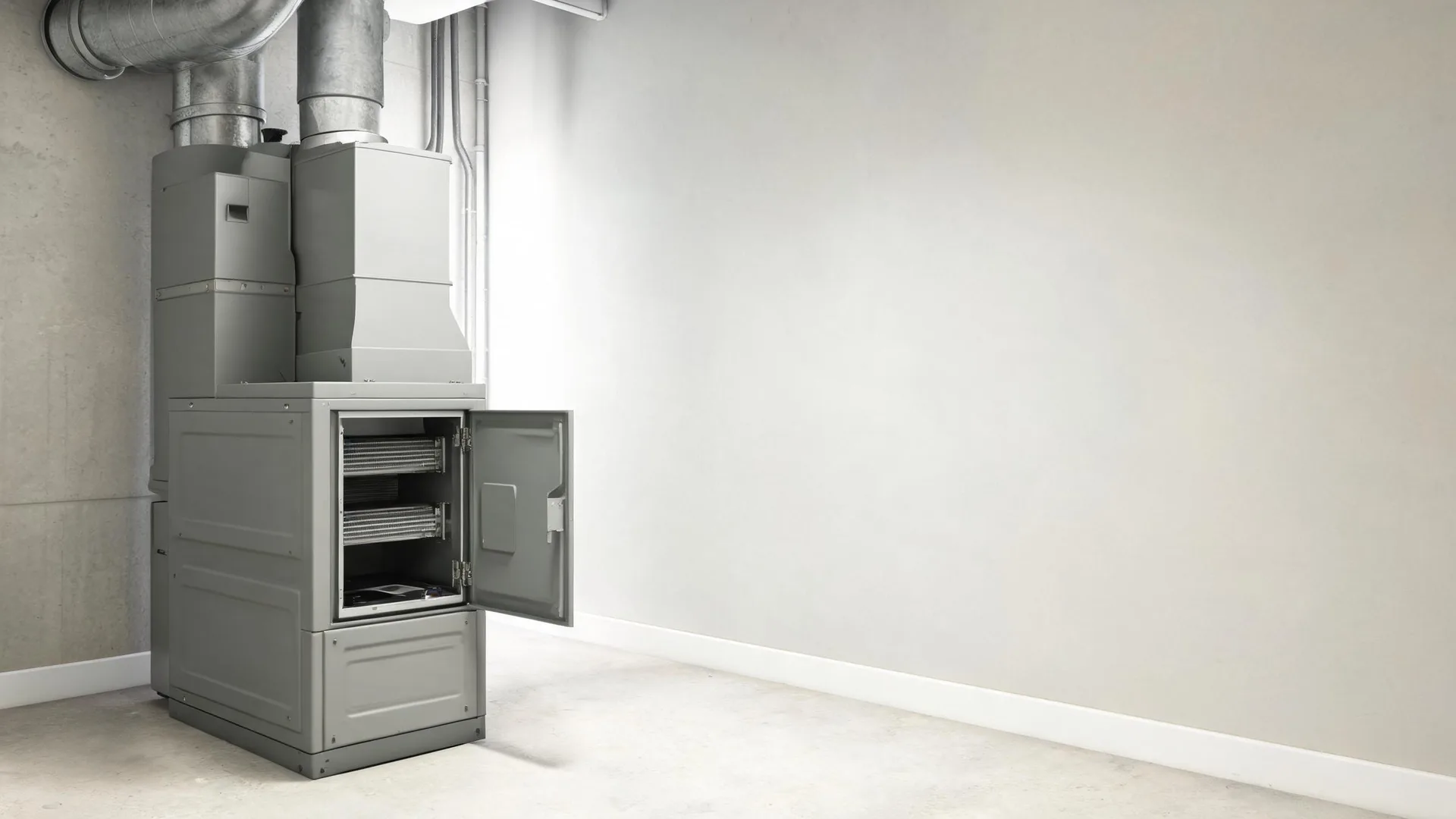
Propane runs $17.33 per million Btu here
North Dakota propane averaged $17.33 per million Btu in 2024. If your furnace runs on propane, that price sets what every bit of fuel it burns actually costs you.
Takes about a minute. No obligation.
North Dakota propane averaged $17.33 per million Btu in 2024. If your furnace runs on propane, that price sets what every bit of fuel it burns actually costs you.
A furnace's AFUE rating says how much of the fuel it burns turns into heat for your house, and how much goes out the flue. Ask what AFUE a furnace carries before you pick one for Marmarth winters.
NOAA nClimDiv, 1991–2020 normals
Furnaces in Marmarth run from September clear through May.
Nine months of heat a year wears a furnace harder than most installed anywhere else.



August is a good month to get a new furnace in. Heat starts up again in September here and runs clear through May, so there's not much slack once the weather turns. Have the old one pulled and the new one set while it's still warm enough that nobody's cold in the meantime. A contractor can take the time to size it right and run it through its paces before it has to work. Put it off and you're doing the same job after the heat's already needed, maybe with a cold house for a day or two while it gets done.
More than half the homes in Slope County run on propane heat, so a propane furnace isn't a special order here. It's what the contractor already knows how to size and install for a house like yours.
Find a contractorThat nine-month run happens with overnight lows averaging 9°F across December, January and February. The furnace isn't idling on those nights, it's putting out heat close to flat out, for hours at a stretch. A unit sized too small for the house will run that way even longer, straining to hold the temperature. Get the load calculated for the house you actually have, not a rule of thumb, and don't pick the furnace by whichever quote comes in lowest.
A contractor should measure the house, the windows, the insulation, and figure the heat loss room by room. A furnace picked by square footage alone or by matching the old one can end up wrong for the house. Ask to see the numbers, not just the recommendation.
A new furnace moving air through ducts sized for a different unit can end up noisy, uneven, or short on airflow where it matters. Ask whether the ducts were checked against the new furnace's output, or whether anything needs to change to make the match work.
Estimates for a typical Slope County home, from EIA household energy data, North Dakota fuel prices and NOAA climate normals. Your home will differ.
Installation day starts with the old furnace coming out, not the new one going in. The line gets disconnected, the flue gets disconnected, and the cabinet gets hauled out before anything new shows up in its place. Once the space is clear, the new furnace gets set and leveled, then tied into the gas line, the flue, and the ductwork. Every joint and connection gets checked for leaks before the system ever fires. The first startup is where a contractor runs it through its paces, checking the flame, the airflow at the vents, and the rise in temperature across the unit, not just that it turns on. A furnace that passes all that on day one is a lot less likely to call for a service visit in the first cold snap.