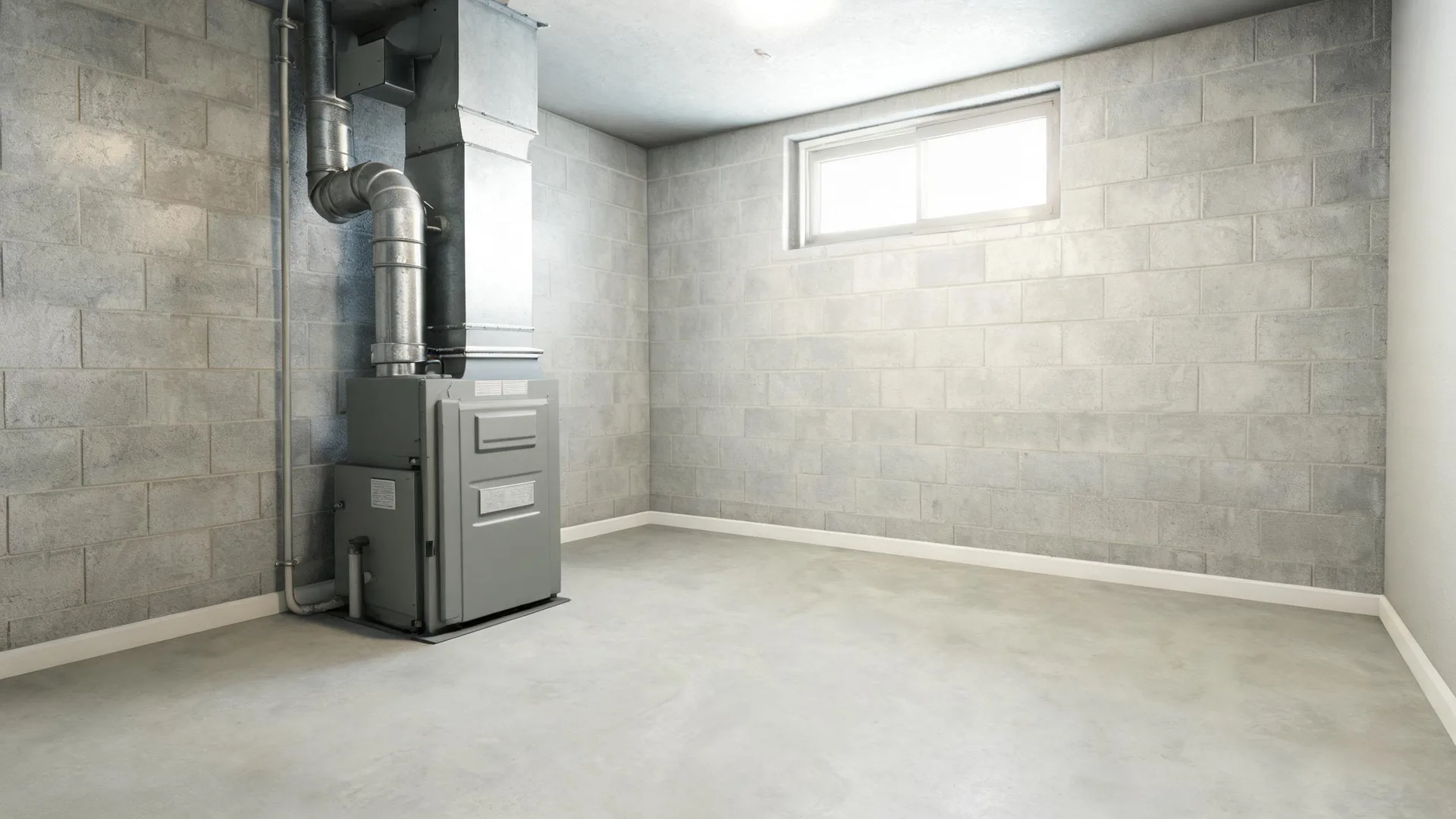
August is the month to get this done
Heat comes on in September here and runs through May, nine months straight. A furnace put in during August gets tested before it has to work, not during the first cold snap.
Takes about a minute. No obligation.
Heat comes on in September here and runs through May, nine months straight. A furnace put in during August gets tested before it has to work, not during the first cold snap.
Once the heat is running there's no good week to shut it off for a new install. Scheduling it before September means picking the day, not scrambling for whoever can come out when the old one quits.

NOAA nClimDiv, 1991–2020 normals
Half the homes around Langdon went up in 1968 or earlier.
A furnace going into a house that old has to be sized to that house, not just to the old unit it's replacing.



Ask what size furnace they're proposing and whether they ran a load calculation or just matched the old unit. Installers can look at the same house and come back with different numbers, and the one who skips the calculation is guessing. Ask about the venting too. A new furnace often runs more efficient than what it's replacing, and that can mean a different vent pipe or a different route out of the house, not just swapping one box for another. Ask what happens to the ductwork already there. A furnace is only as good as the air it can move, and nobody can promise comfort in every room without looking at what's carrying that air now. Ask how the heat is staged, because that changes how long the furnace runs and how even the house feels while it's running.
A furnace here runs September through May with nights near zero all winter. That's not a machine you size by matching what's already there or by picking the lowest bid. Get the load calculation done and pick the installer who did one.
Find a contractorA load calculation should account for the house, not the neighborhood average. If your home was built in 1968 or earlier, ask the installer whether they measured this house or sized off the square footage. Insulation levels and window types changed a lot over the decades since, even among houses built close together. That's the kind of detail a walkthrough catches and a guess doesn't.
The cabinet and burners are only part of the bid. Venting material, ductwork changes, electrical work, and the thermostat all add to the job, and a quote that skips them isn't comparing the same install as one that includes them.
A furnace that only runs full blast or off is the simplest thing to install. One that can hold a steadier temperature asks more of the control wiring and sometimes the ductwork, and that shows up in what the install takes to do.
Sizing a furnace comes down to how fast the house loses heat, not how big the house is. A load calculation looks at wall and ceiling insulation, window area and type, air leakage, even which way rooms face, and works out how much heat has to go in to replace what's getting out on the coldest night. Square footage alone can't tell you that. Houses the same size can need different size furnaces if one has more glass or leakier walls. Oversizing feels like it can't hurt, but a furnace that's too big cycles on and off fast, heating the house in short bursts instead of running steady, and that short cycling wears on the ignition system while rooms farther from the furnace never quite catch up. Undersized, and it runs flat out all night and still can't hold the temperature when it's coldest. The right size matches the heat loss of that house, worked out room by room, not guessed from the unit being replaced.
Install day starts with the old furnace coming out, and that's when a lot of hidden problems show up. A cracked heat exchanger, a cut corner in the old ductwork, a vent pipe that was never sized right the first time. The new furnace goes in, but it doesn't get fired up right away. Gas lines get connected and checked for leaks. Venting gets run, and if the new unit's more efficient than the old one, that often means new pipe altogether, not a reuse of what's there. Electrical and the thermostat wiring come next. Only after all that does the installer fire it up, and a careful one runs it through a full cycle, checks the temperature rise against what the manufacturer calls for, and checks the gas pressure at the valve. A furnace that fires up fine but was never checked against those numbers can still be set up wrong.