Electricity here runs $33.73 per million Btu
That's the 2024 rate for North Dakota homes. A furnace that wastes heat is burning money at that rate every time it cycles on.
Takes about a minute. No obligation.
That's the 2024 rate for North Dakota homes. A furnace that wastes heat is burning money at that rate every time it cycles on.
A new furnace in Gwinner has more riding on it than one somewhere with cheaper power. How it's sized and installed decides what that rate turns into on your bill.
NOAA nClimDiv, 1991–2020 normals
Furnaces in Sargent County start running in September.
Get a new furnace installed in August, before the first cold night puts it to work.




Sargent County falls under zone 6A in the 2021 energy code, a cold, long-winter zone, and that rating shapes what can legally go into your house. If you're installing a gas furnace, federal rules already set a floor: any unit built after November 19, 2015 has to turn at least 80 percent of the gas it burns into heat. That minimum rises to 95 percent for furnaces built on or after December 18, 2028, which will narrow what's sold from that date forward. A federal tax credit is available for qualifying high-efficiency furnaces, worth checking into before you settle on a model. None of this picks the furnace for you, but it marks the line a new gas system here has to clear.
Electricity runs $33.73 per million Btu here, and a furnace that's sized and installed right is what keeps that rate from turning into a bigger bill than it needs to be. Get a quote on a new furnace for your Gwinner home.
Find a contractorNine months a year, this furnace runs. That's most of the calendar, not a stretch during the worst weeks. When a new system here is sized wrong, oversized or under, it shows up fast because there's so little time each year the furnace gets to sit idle. Get the sizing right at install, matched to this house, not just the last one. That's the one decision here you don't get to revisit cheaply once the ductwork and furnace are in.
The efficiency number on the label tells you what share of the fuel actually turns into heat in your house, the rest goes out the flue. It's tested under set conditions. What you get depends on whether the furnace is sized for the house, whether the ductwork moves enough air, and whether it gets serviced. A high rating on the label and a poorly installed furnace can still leave you with a high bill.
A higher-rated furnace usually costs more up front, and that cost is supposed to come back to you in lower fuel use over the years you own it. That only holds if the unit is matched to the house and the duct system can deliver what it produces. Comparing two furnaces on the label number alone misses the part that actually determines what you pay to run either one.
Sizing a furnace starts with a load calculation, not a guess based on the old unit or the square footage alone. A contractor works out how fast the house loses heat by looking at the walls, the windows, the insulation, the ceiling height, even which way the house faces. That number, not habit, is what decides the size of furnace that goes in. Too big and the furnace blasts the house to temperature and shuts off before it finishes a full cycle, so rooms end up warm near the vents and cold everywhere else. Too small and it runs constantly through the coldest stretches, straining to keep up and still falling short. Either mistake lives in the house for as long as the furnace does, because once it's set and the ductwork is connected to it, resizing means tearing into both again.
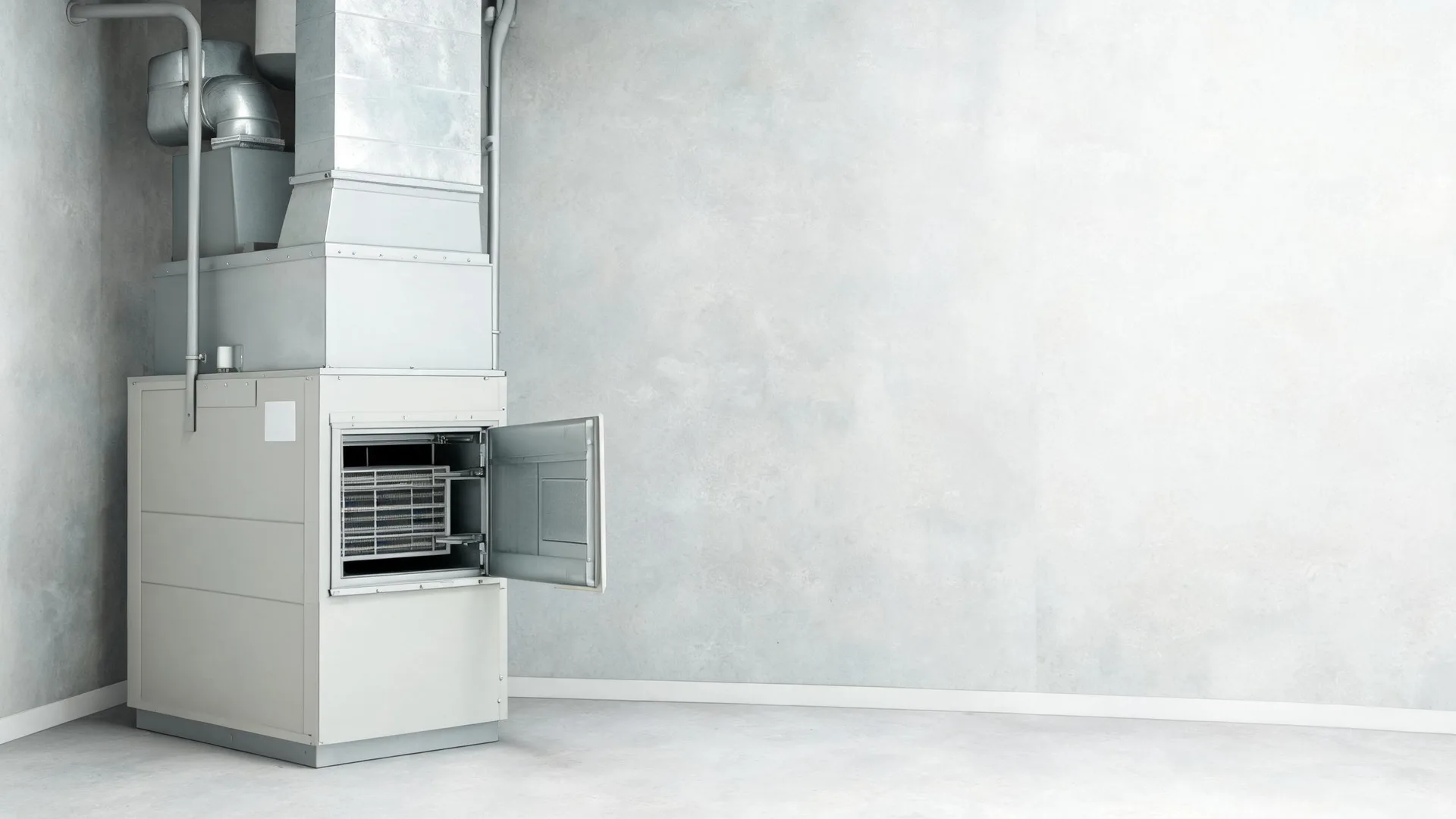
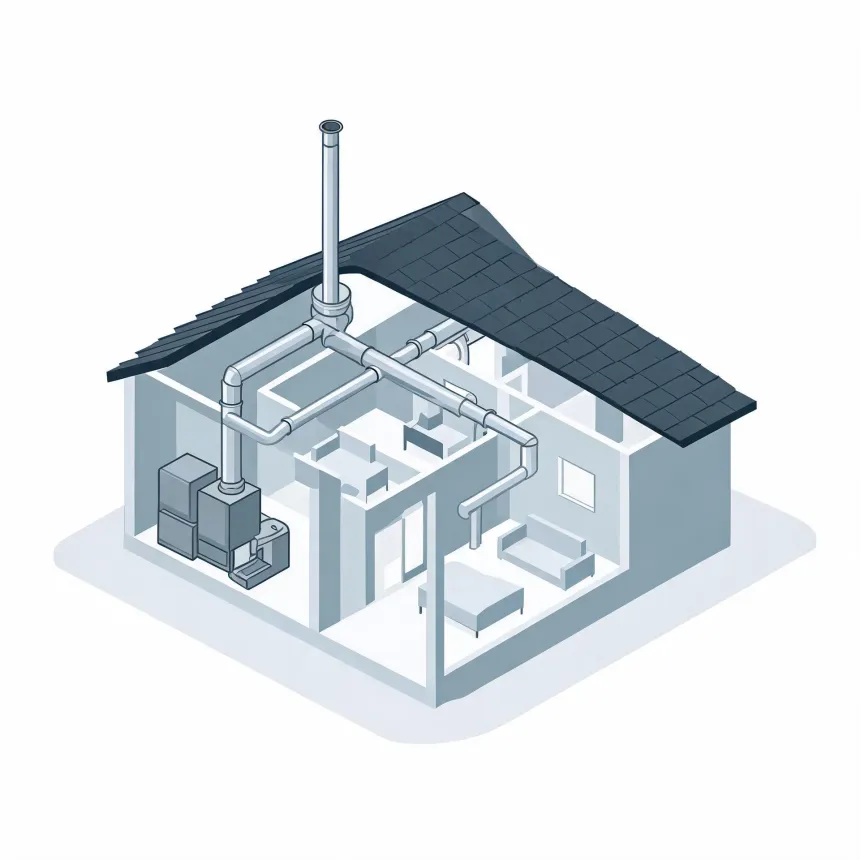
Installation day starts before anyone touches the old furnace. The contractor shuts off gas and power, drains or disconnects what needs it, and disconnects the ductwork and venting from the unit coming out. Pulling the old furnace usually takes less time than people expect. Setting the new one takes longer, because it has to sit level, connect cleanly to the existing ducts or new transitions, and line up with the gas line, the vent pipe and the electrical. Each connection gets tested before anything is closed up: the gas line checked for leaks, the vent pipe checked for a proper slope and seal so exhaust leaves the house instead of backing up, the electrical checked at the control board. Once the furnace fires, the contractor checks the flame, the temperature rise through the unit, and the airflow at the vents before calling the job done. A furnace that passes every check on install day is the one that gives you the fewest surprises that first cold night.