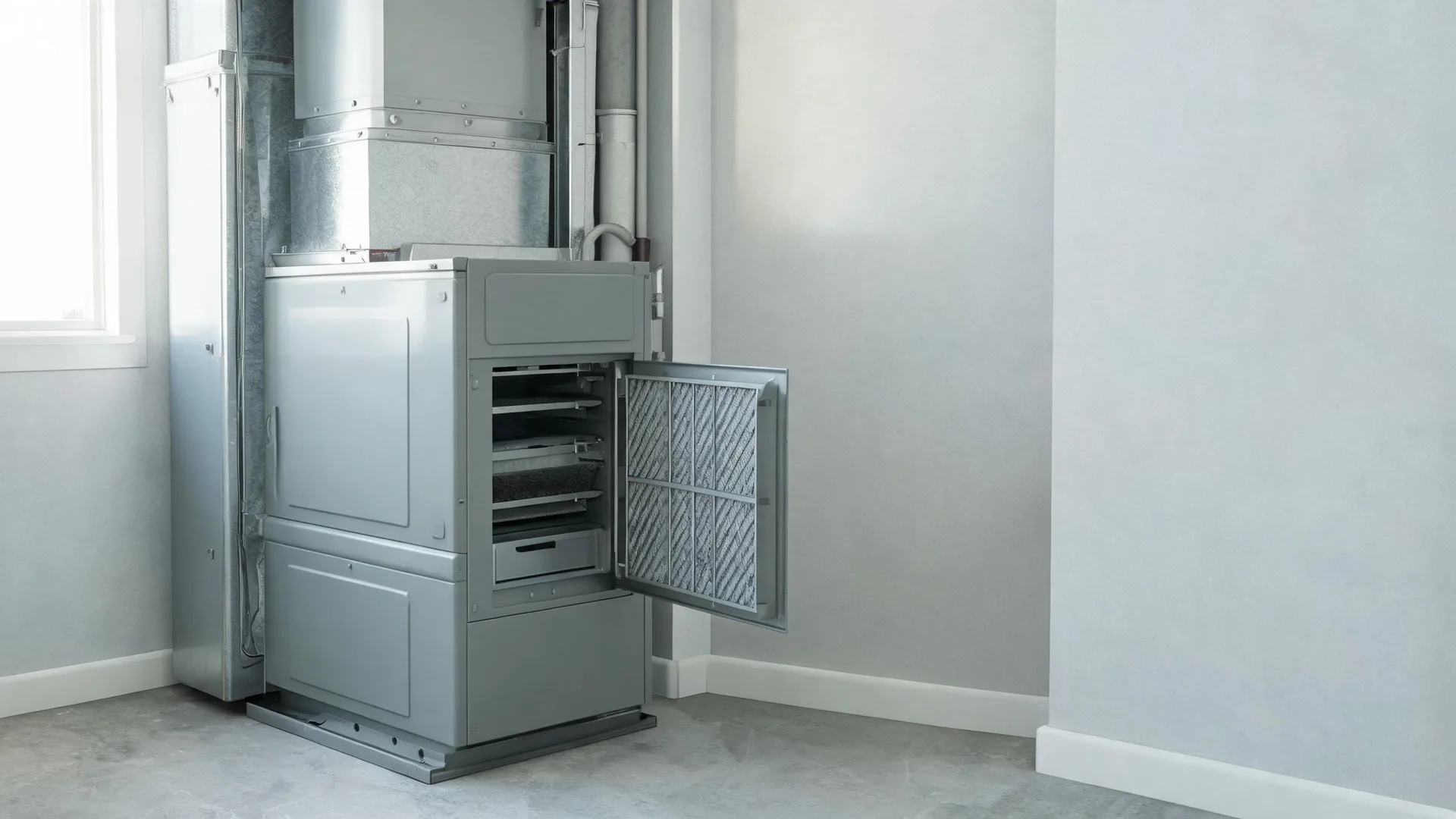
Electricity runs $33.73 per million Btu here
That is North Dakota's statewide average for 2024. A furnace that wastes heat is burning through that rate every time it cycles on.
Takes about a minute. No obligation.
That is North Dakota's statewide average for 2024. A furnace that wastes heat is burning through that rate every time it cycles on.
A furnace sized and installed right for your house will use less of that electricity to do the same job. That difference shows up on every bill, not just the first one.

NOAA nClimDiv, 1991–2020 normals
Furnace runs about nine months a year in Cass County, September through May.
A furnace running that much of the year needs to be sized right the first time.


Cass County sees its share of severe weather, 354 events logged between 2015 and 2024, and 172 of those were damaging wind. Hail hit 109 times in that span, and a hard enough storm can dent or bend the fins on an outdoor unit. Where that unit sits matters more here than in calmer places. Power goes out too. Statewide, 7% of households were without power for a day or more in 2024, and with most furnaces here running on electricity, no power means no heat. Worth asking the installer about a disconnect or backup option before the next outage, not during it.
Get the sizing and install right and the electric rate you're already paying starts working for you instead of against it, on every bill from here on.
Find a contractor
September is when heat gets turned on here, and it runs until May. That's nine months of the year this furnace carries the load, through overnight lows that average 3°F in December, January and February. Putting in a new furnace in August means it goes in before any of that starts, with the old one still running while the new one gets set and checked. Wait for the first cold snap and there's no good time left to choose from, just whichever crew can get to you first.
A straight swap means the install crew disconnects the gas or electric supply, the venting and the ductwork from the old furnace only after the new one is set, wired and tested. Heat stays on through the changeover. The old unit usually keeps running right up until the new one takes over, sometimes the same day, so the house isn't sitting without heat while the work gets done.
Once the new furnace is in and running, the old cabinet, burner assembly and heat exchanger get disconnected and carried out. Installers typically take the old unit with them when they leave rather than leaving it for the homeowner to deal with. If the old system used a different fuel or venting setup than the new one, ask what happens to that old venting or gas line, since capping it off correctly is part of finishing the job right, not an afterthought.
Size is what decides most of the price. A furnace too big for the house cycles on and off fast, never settling into a steady run, and that short cycling wears out the igniter and the blower motor sooner than they should quit. A furnace too small just runs and runs, trying to catch up on the coldest days, and never quite does. Getting the size right takes a load calculation on the actual house, not a guess based on the old unit's size or a quick look at square footage. Ductwork plays into it too. If the existing ducts are too small or too leaky for the new furnace's output, air gets forced through faster than it should, which shows up as noise at the vents and rooms that never even out. A furnace matched to the house it's heating, with ducts that can carry what it puts out, is doing less work to hold the same temperature.
Cass County falls under zone 6A in the 2021 energy code, a cold zone with a long heating season, and that sets a floor on what furnace can go into a house here. A furnace that burns gas has to turn at least 80 percent of that gas into heat over a season if it was built from November 2015 on. A furnace that runs on electricity doesn't burn anything, so it converts nearly all the power it draws into heat already, which is part of why electric furnaces are what this county mostly runs. The 80 percent gas standard is set to rise to 95 percent for units built from December 2028 on. Worth asking an installer which fuel and which standard a given furnace is built to before deciding what fits the house.