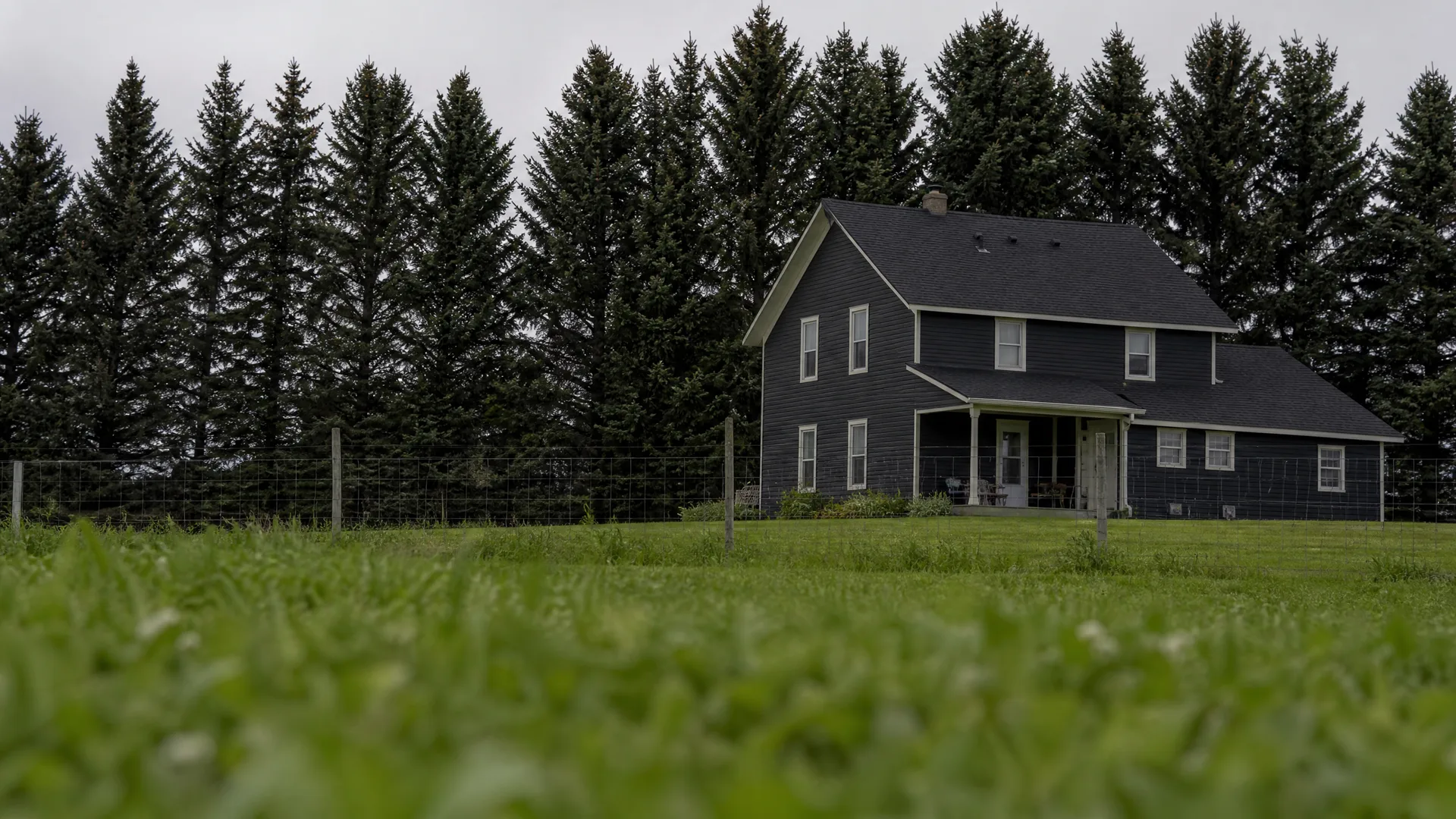




A dark grey two-story house with a porch stands in front of a row of tall evergreen trees, behind a wire fence and a blurred green grass field under an overcast sky.

Furnace Installation in Crosby, ND

Tell us about the job

Takes about a minute. No obligation.

New system or replacementFurnace or heatingDivide County, ND
Step 1 of 2

What ZIP code is the job in?

Divide County sits in zone 7, the coldest tier in the energy code, and a furnace here runs most of the year. Right now any new furnace has to hit at least 80.0 percent AFUE, and that's the floor a contractor has to install to. That floor moves up to 95.0 percent in a few years, so a furnace built right at that line is worth asking about before it goes in. A federal tax credit is available for higher-efficiency equipment, worth checking before you settle on a system.

10 months
September through June, your furnace is on duty
3°F
the average winter night it heats against
80% AFUE
the federal minimum any new unit must meet
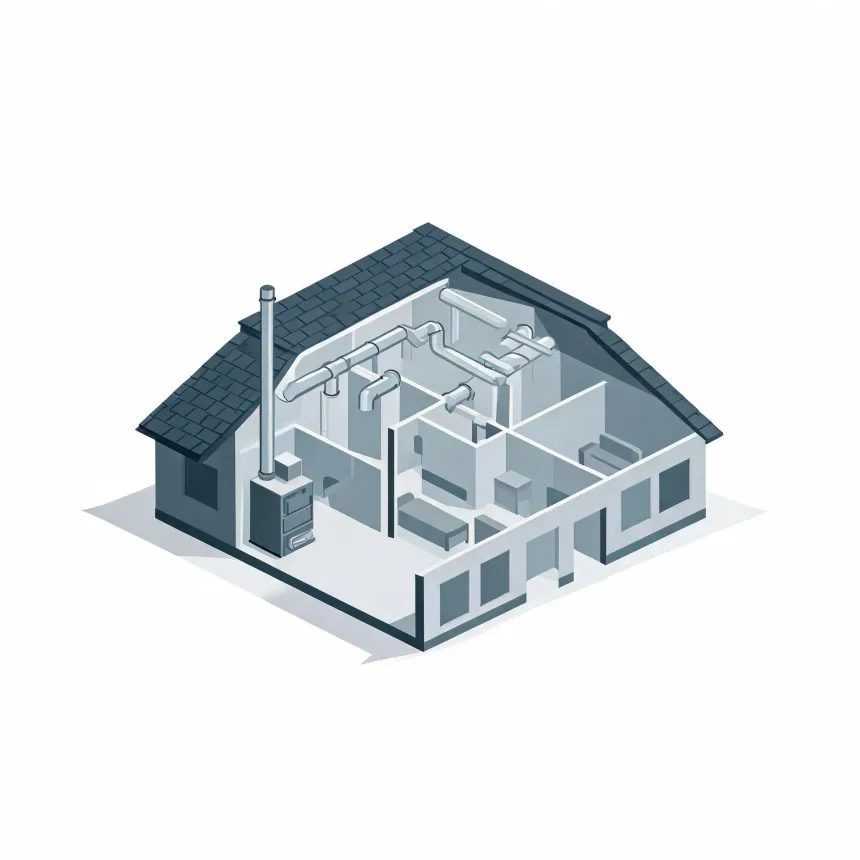
Isometric grayscale illustration of a cutaway house showing interior rooms, ceiling ductwork, a flue pipe, and a furnace unit on the left side.
Your furnace works hardest from November through March.

NOAA nClimDiv, 1991–2020 normals

Furnaces here start running in September.

Get yours installed in August and it's ready before the first cold morning, not during one.

Ten months of heat a year. Nights near zero. This furnace earns its keep.

Heat runs September through June
Winter nights average 3°F
Climate zone 7

Half the homes in Divide County were built in 1963 or earlier. A furnace going into a house that old is going into ductwork, venting and return air sized for whatever was installed decades ago, not for the unit in a showroom. The wrong size furnace in an old system will short cycle or struggle to push air through runs that were never meant for it. A contractor working in a house this age should be checking the ducts and the venting before quoting a model, not after. That's worth asking about directly if your house falls on the older side of that line.

Size it for ten months of heat

Ten months of heat a year is hard on a furnace that was sized wrong from the start. Get the sizing and the efficiency right at installation, and weigh those against each other before you pick a model.

Find a contractor
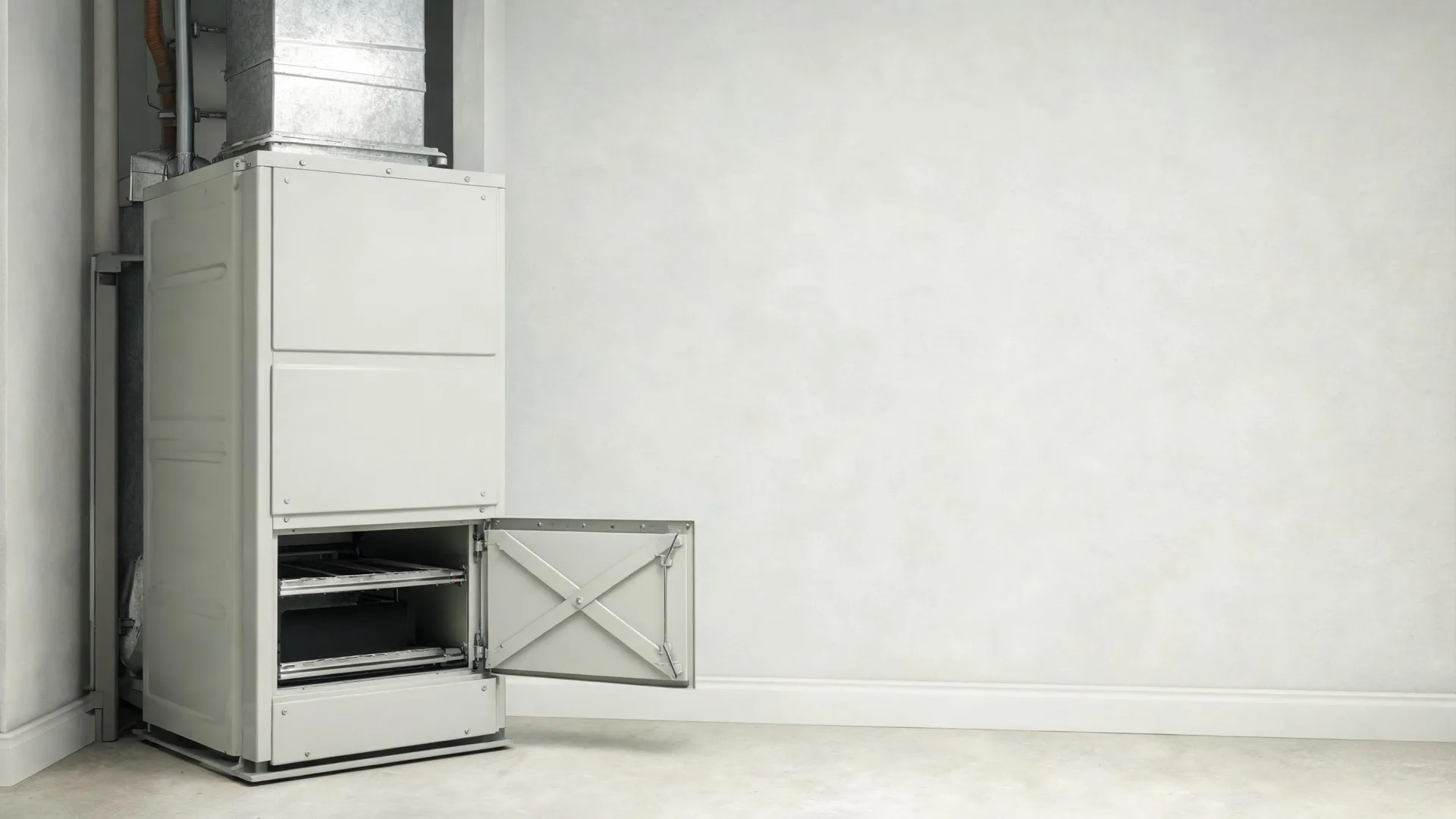
A gray residential gas furnace installed in an unfinished basement, connected to sheet-metal ductwork and PVC pipes.

Match the furnace to the house, not the other way around

Ask whoever quotes the job to measure the ducts and the return air before they name a model, not after. A load calculation tells them what the house can actually move, not what a showroom unit is rated for. If your house was built in 1963 or earlier, that measurement matters more, not less. A contractor who skips straight to a quote is guessing at the fit.

Someone has to take the old furnace out

The old unit gets disconnected from the gas line, the venting and the ductwork, then hauled out whole. If it's a standard furnace the gas line is capped off safely before anyone leaves. Whoever does the install should confirm the old vent isn't shared with another appliance, since pulling one unit can change how the other vents.
The new furnace won't just drop into the old spot

A higher-efficiency furnace vents differently than an old one, often through a different wall or a different pipe altogether, not up the old flue. That can mean new venting, not reusing what's there. Ask directly whether the replacement uses the existing vent or needs its own, because that changes what the job actually involves.

What drives the cost of putting in a furnace comes down to how much has to change beyond the box itself. A furnace that matches the existing ductwork, venting and gas line is a straightforward swap. One that doesn't means new ductwork runs, a new vent pipe, or a bigger gas line to feed a bigger burner, and each of those is its own job on top of the furnace. Higher efficiency models add a condensate line to drain the moisture they produce, which some houses have a place for and some don't. The blower has to be sized to the ductwork too, not just the house, since a blower pushing against runs that are too small will wear out early no matter how good the furnace is. None of that shows up on a price tag for the unit itself, but all of it shows up in what it takes to get that unit running safely.

Installation day starts with the old furnace coming out. The new one goes in through whatever opening is available, a doorway or a window if the hall won't clear it. Once it's set in place, the work is mostly connections. Gas line, venting, ductwork, electrical, and on a higher-efficiency unit, a condensate line. Each one gets tested on its own, not all at once at the end. The gas line gets pressure tested for leaks. The venting gets checked for proper draft, so exhaust actually leaves the house instead of backing up into it. Then the furnace gets fired and run through a full cycle. The flame, the temperature rise across the heat exchanger, the airflow coming out of the registers. A contractor should be adjusting the blower speed and gas pressure to match the house, not leaving factory settings in place and hoping they fit. The last check is for carbon monoxide, done with the furnace running and the house closed up, because that's the condition it'll actually run in all winter.