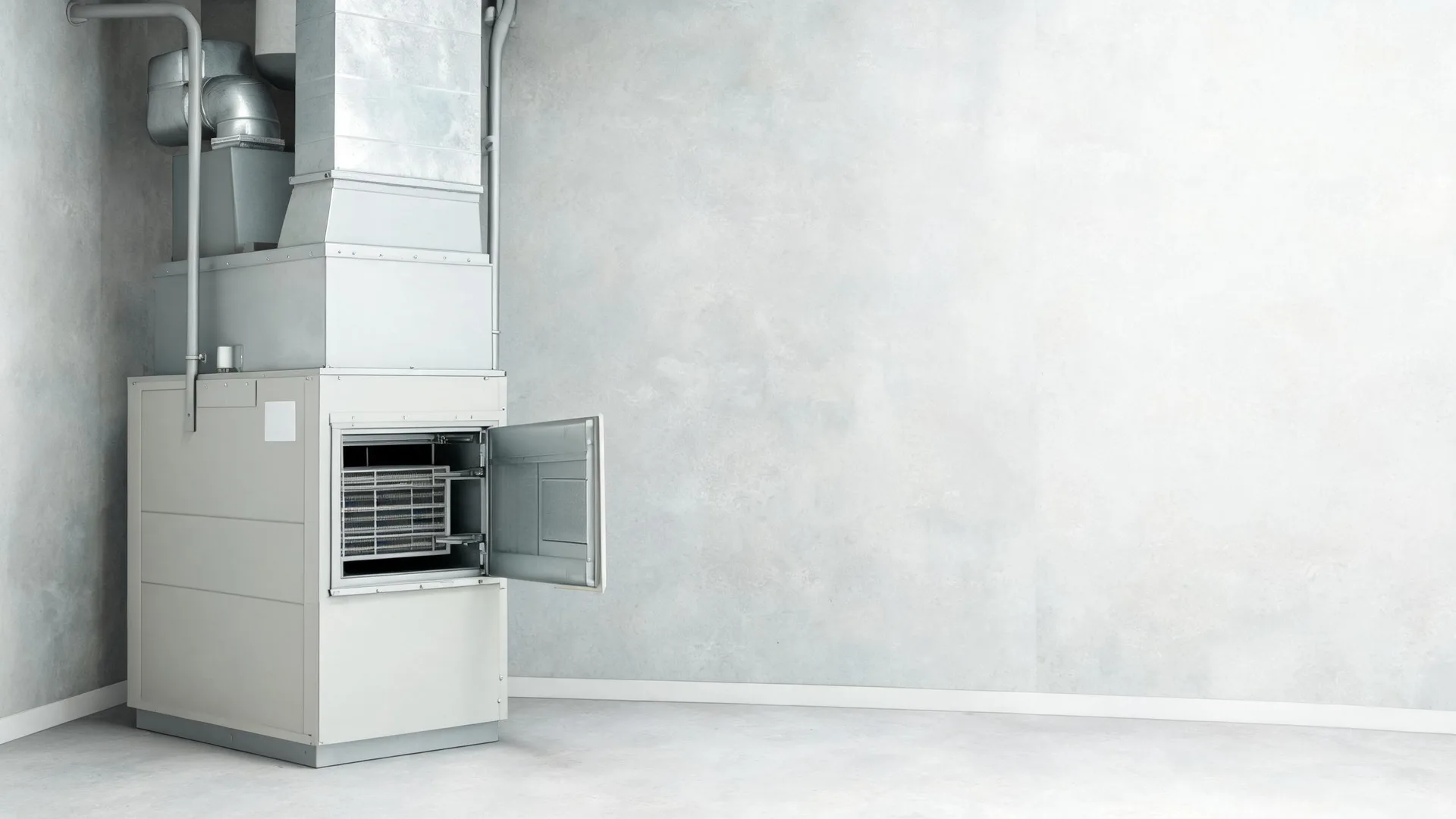
Electricity here runs $33.73 per million Btu
North Dakota power costs more than in most states. A furnace that wastes heat costs you more every month than the same waste would cost somewhere cheaper.
Takes about a minute. No obligation.
North Dakota power costs more than in most states. A furnace that wastes heat costs you more every month than the same waste would cost somewhere cheaper.
Two furnaces can heat the same house, but the one with the higher AFUE turns more of that electricity into heat instead of losing it. In a state with prices this high, that difference shows up every month, not just on paper.

NOAA nClimDiv, 1991–2020 normals
Furnaces in Griggs County run nine months a year, September through May.
A furnace sized for occasional use won't hold up to nine months of winter work.




Ask for the AFUE rating before you decide anything else. It's printed on the unit's yellow EnergyGuide label, right next to the estimated yearly cost. A higher AFUE means less of the gas you pay for goes up the flue instead of into the house. At $33.73 per million Btu, that waste shows up on the bill here more than it would somewhere with cheaper power. Have the contractor show you the AFUE difference in writing before you sign, and ask what it means for this house specifically.
Electricity heats 46.9% of homes in Griggs County, more than any other fuel. Bottled, tank or LP gas comes next at 34.7%. If your house already runs on electric heat, replacing it with the same fuel means no new line to run and no change to what the house is set up for.
Find a contractorGet the size right before anything else. A furnace that's too small will run flat out all nine months and still fall behind when it hits 2 below zero at night. One that's too big cycles on and off instead of settling into a steady run, and that wears on it just the same. The contractor should run a load calculation on your house, not just measure the square footage, and should walk you through why the unit they're proposing fits it. If the quote comes with a number but no explanation of how they got there, ask.
A load calculation adds up the walls, the windows, the ceiling height, and where the house sits, because houses the same size can lose heat at very different rates depending on how they're built. Skip that step and the number on the quote is just a guess dressed up as math.
A furnace too big for the house heats the air fast, shuts off, and starts again soon after. That short cycling keeps the heat exchanger from ever settling into a steady run, and it's the steady run that wears evenly. Right-sized is the one that runs long and even, not the one with the biggest number on the box.
The old furnace doesn't just get unplugged and hauled off. Whoever installs the new one has to disconnect the gas line, pull the flue connection apart, and break the duct connections at the plenum before the cabinet comes out. If the old unit is gas, that gas line gets capped off safely, not just left loose. The new furnace rarely sits in exactly the same spot or takes the same size duct opening, so expect some fitting and sealing work at the plenum to match it up. A contractor worth hiring will also check the venting while they're in there, since a new high-efficiency furnace often vents differently than what the old one needed.
Installation day starts with the old unit still connected, so the first hour is disconnecting it, not putting in the new one. Once that's cleared out, the real work is fitting the new furnace to openings and connections built for a different unit. The gas line gets reconnected and pressure tested before anything runs. The flue gets checked too, since a new furnace may draft differently than the one it replaced and can need a different vent pipe to do it safely. Expect the contractor to fire it up near the end of the day and run it through a full cycle, checking the flame, the temperature rise, and the airflow at the registers before calling it done. A straightforward swap can usually finish in a day. One that needs new venting or duct changes at the plenum takes longer, and a contractor who tells you that upfront is one who looked at the job instead of guessing at it.