









Heat pump vs propane heat in Leeds, ND

Start one form

Winters in Benson County are hard, and most homes around Leeds run on propane because that is what works here. Weighing a heat pump against propane for your house means knowing how your furnace is set up now, what a cold snap does to a heat pump's output, and what propane actually costs you compared to the power rate here. That is not something you work out from a chart. It depends on your ductwork, your tank, your current system. Finding someone to walk through that with you usually means calling around, repeating the same questions to each one, and lining up quotes that are hard to compare because no two contractors look at the same things. This page connects you with one licensed contractor local to Leeds, someone who installs and services this equipment through every winter here and knows how propane and heat pump systems actually perform on homes in this county. You get one call, one visit, one straight answer about your options, not a stack of bids to sort through.

A heat pump alone will struggle to keep your house warm through a Benson County winter. Below about 20 to 30 degrees, depending on the unit, a heat pump pulls less and less heat out of the outside air, and once temperatures drop into the teens and below, which happens for stretches most winters here, it can't keep up with the house's heat loss on its own. That's why most homes around Leeds heat with propane, burned in a furnace that makes its own heat instead of moving it from outside air that's gone too cold to give much up. Some homeowners pair a heat pump with their propane furnace, letting the heat pump carry the milder days in fall and spring and the furnace take over once it turns cold. Whether that makes sense for your house depends on your ductwork, your current furnace, and how it's set up to switch between the two.

A smiling woman with dark shoulder-length hair in a cream V-neck sweater sits at a marble counter with a glass of red wine, with a kitchen and softly lit living room behind her.
A woman in a dark green sweater laughs while seated at a marble kitchen island with a glass of red wine, with open shelving, cabinets and a living room visible behind her.
A woman with long dark hair in a cream knit sweater laughs while looking off to the side, seated at a counter with a glass of red wine, in a dimly lit living room with a sofa, lamp, framed pictures and houseplant behind her.
A smiling woman with long dark hair in a beige sweater sits at a marble kitchen counter with a glass of red wine, with a dimly lit living room behind her.

Is your furnace keeping up this winter?

If your propane furnace is running long cycles and the house still feels cool near the floors and windows, or the burner is kicking on more often than it used to, that's worth a look before the coldest stretch of January hits. Maybe you've noticed the propane tank reading lower than expected for how early it is in the season, or the furnace sounds like it's working harder to reach the thermostat setting. A furnace that's struggling to keep up can mean a dirty burner, a failing igniter, or a unit that's simply undersized for a hard Benson County winter. Left alone, that strain tends to get worse with the cold, not better, and it can mean higher propane use for less heat in the rooms you're actually using.

A beige residential gas furnace with white PVC vent pipes, copper and yellow gas lines, and adjacent sheet-metal ductwork stands on a concrete floor beside a plain white wall.

What a heat pump still does

A heat pump does not disappear once it gets cold. Down to around 20 to 30 degrees it is still pulling usable heat out of the outside air, and in a paired setup it can carry the house through the milder stretches of fall and spring on its own, cutting into the propane you would otherwise burn those months. The furnace takes over once temperatures drop below where the heat pump can keep up.

A gray high-efficiency furnace with white PVC vent pipes and metal ductwork stands on a concrete floor beside a plain off-white wall in a basement.

Why propane holds its heat

A propane furnace burns fuel to make heat directly, so its output does not fall as the temperature outside drops. The same furnace that heats the house at 20 degrees heats it just as well at 20 below. That is why propane alone, or propane backing up a heat pump, is what carries most houses in Benson County through January and February, when a heat pump working by itself would fall behind.

Why does propane still run the show in Benson County winters?

  • Winter nights average 1°F

    Winter nights average 1°F here. That's the air a heat pump has to pull heat from, and there's not much left to give at that temperature.

  • Heat runs September through May

    Heat runs September through May in Benson County. A system that can't hold up through those nine months leaves you cold for most of the year.

  • 59.3% of homes heat with propane

    59.3% of homes in Benson County heat with propane. That's what's already in most houses around Leeds, and what a contractor here knows best.

NOAA nClimDiv 1991-2020 · ACS 2020-2024

  1. The thermostat calls for heat and signals the propane furnace first.

  2. A dual-fuel control checks outdoor temperature against the set changeover point.

  3. Above that point, the heat pump runs alone and the furnace stays off.

  4. Below that point, the control shuts down the heat pump and fires the furnace.

An older gas furnace with two louvered front panels stands on a concrete basement floor beside galvanized sheet-metal ductwork, pipes, and a weathered concrete wall.
Before you get your furnace installation
A gray high-efficiency furnace in a basement, connected to sheet-metal ductwork on the left and white PVC vent pipes above, with black gas and drain piping and an exposed wood-stud wall with OSB sheathing on the right.
After you get your furnace installation

Skip calling around

One installer gets your project, so there's no bidding war over it.

No fee to send it, and nothing to sign.

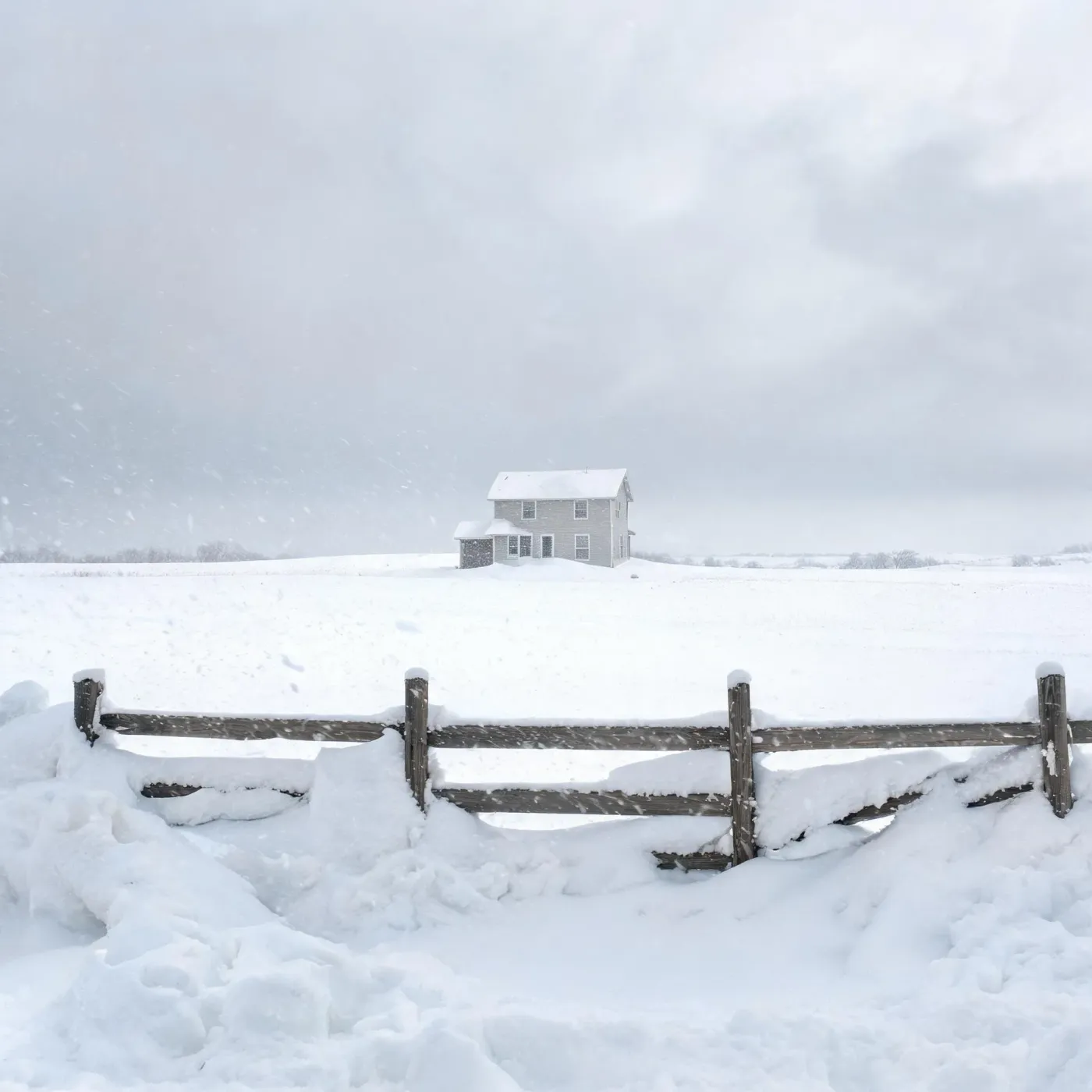
A two-story light-colored house with a gabled roof stands alone on a snow-covered field under an overcast sky, with a weathered wooden post-and-rail fence half-buried in snow drifts in the foreground.

On a typical December or January night here, the air outside settles to around 1°F, according to National Weather Service data for Benson County. That's cold enough that your furnace isn't cycling on and off so much as running long, steady stretches to hold the house at temperature. You'll feel it in how often the burner is going and in how warm the air coming out of the vents needs to be to keep up. A heat pump working alone against air that cold has almost nothing left to pull from, which is why the furnace carries the load on nights like these.

NOAA nClimDiv 1991-2020

Propane Alone or Paired With a Heat Pump

Propane alone

  • A propane furnace holds its output no matter how far the temperature drops, so a night at 1°F gets the same heat as a night at 20°F.
  • The furnace is already sized for Benson County winters, so there's no changeover point to set and no second system to maintain.
  • Propane has to be delivered and stored in a tank on your property, so you're watching a gauge and scheduling fills through the winter.
  • Running the furnace alone through a mild October or April means burning propane at times a heat pump could have handled on its own.
  • Repairs and replacement parts come from whoever services propane furnaces locally, which is most contractors in this area.

Heat pump paired with propane

  • Down to around 20 to 30 degrees the heat pump covers the heating load on its own, so the furnace stays off and no propane gets used.
  • Once temperatures drop below that range, a control hands the load over to the furnace automatically, so you're not switching anything by hand.
  • The heat pump also runs your air conditioning in summer, so one outdoor unit covers both jobs instead of sitting idle half the year.
  • Adding a heat pump means a second piece of equipment outdoors, with its own installation and its own eventual repairs.
  • The furnace still has to be sized and maintained for the coldest stretches, since the heat pump hands off the hardest part of winter to it.
A gray high-efficiency furnace with white PVC vent pipes stands against a concrete basement wall beside sheet-metal ductwork, a small condensate pump on the floor, and exposed wood framing at left.

A furnace running the way it should

This is a propane furnace carrying the full load, flue pipes and ductwork all tied in clean. No second system to coordinate, no changeover point to set. It just fires and holds the house at temperature, night after night, down to 1°F.


A gray sheet-metal furnace with flue pipe and adjacent ductwork stands against a stone basement wall on a concrete floor, with white PVC and metal pipes running nearby.

A furnace that's past its prime

Older gas lines, flex tubing, a basement that was never finished out. A furnace like this in a Benson County house can still get the job done, but it's worth knowing whether it's sized right and whether the venting matches what's installed.

A closed laptop and a cream mug of coffee on a coaster sit on a dark wooden table, with a potted plant at left and a kitchen counter, tiled backsplash and shelf of ceramics in the background.

Where that leaves you

For most houses around Leeds, propane carries the winter on its own, and a heat pump works best as a partner for fall and spring rather than a replacement. What settles it is your furnace: its age, its output, and whether it's still matching the house the way it used to. That's a question for someone who can look at the unit itself, not one the weather answers by itself.

Finding that someone is usually the slow part. Looking up contractors, calling a few, walking each one through the same details about your furnace, then waiting on quotes to compare takes real evenings. Submitting this request skips that. It goes to one licensed contractor working in Benson County, someone who services propane furnaces and heat pumps in this cold every winter and knows what tends to give out first in a system like yours. You explain your situation once, to someone who already knows what a 1°F night asks of your equipment.

A living room corner with a light beige sofa holding a textured taupe cushion, a large ceramic vase of olive branches by a window, a framed neutral artwork on the wall, and a dark bowl with stacked books in the foreground.
A gas furnace with attached PVC and metal piping and sheet-metal ductwork stands on a concrete pad in a dim unfinished basement with concrete walls and exposed floor joists.

Describe it once

The pro who reaches out is licensed in North Dakota.

New system or replacementFurnace or heatingBenson County, ND
Step 1 of 2

What ZIP code is the job in?

