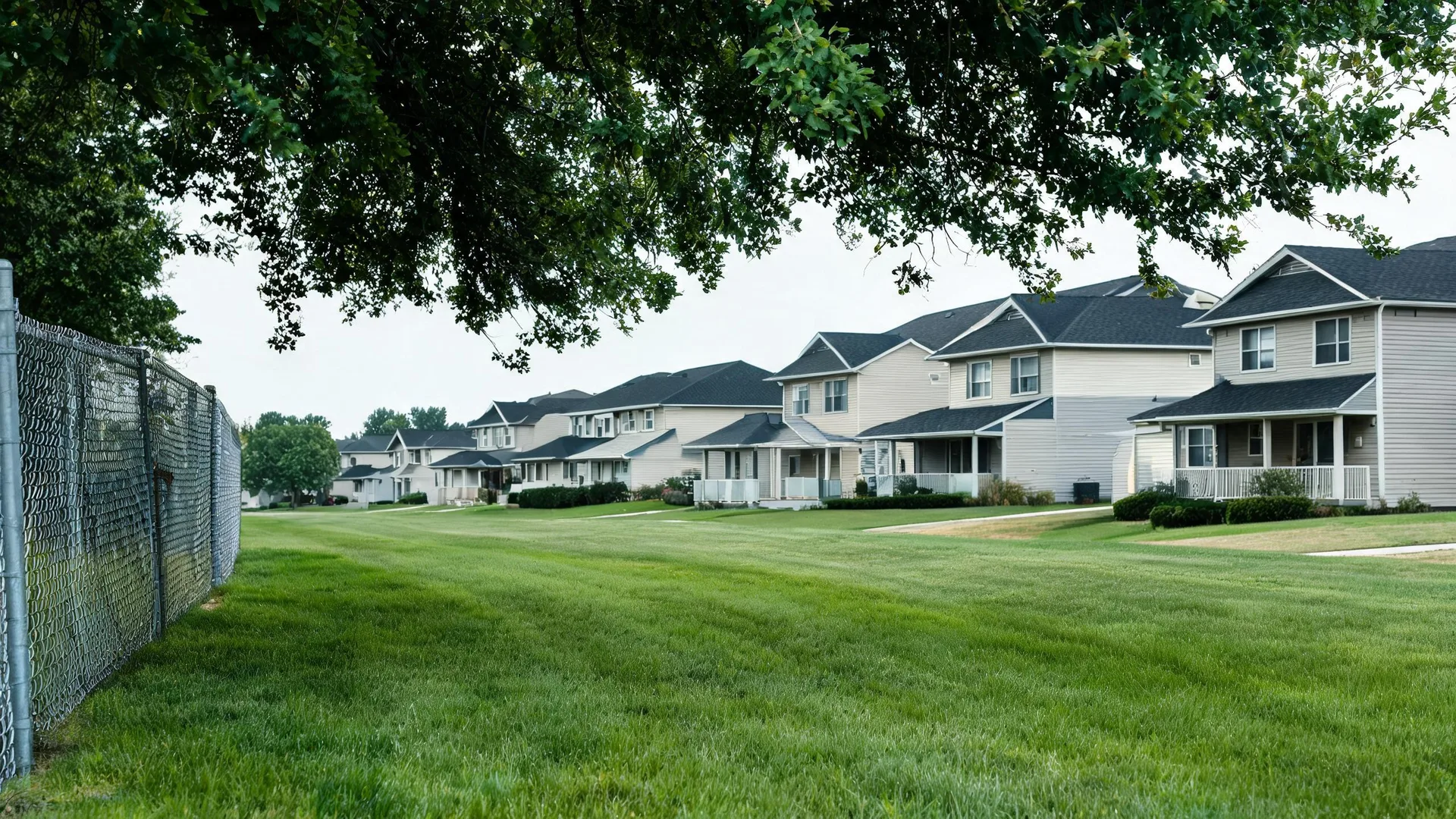




A row of two-story houses with light siding and gray roofs behind a wide mown lawn, with a chain-link fence at left and overhanging tree branches framing the top of the frame.

Furnace Maintenance in Valley City, ND

Tell us about the job

Takes about a minute. No obligation.

Tune-up, service, or cleaningFurnace or heatingBarnes County, ND
Step 1 of 2

What ZIP code is the job in?

Electricity in North Dakota ran $33.73 per million Btu in 2024, and that's what an electric furnace falls back on when it has to work harder than it should. A dirty filter or a flame sensor losing its signal forces longer cycles to get the same heat into the house. Those extra minutes add up over a whole winter. A yearly tune-up catches the filter, the flame sensor, the blower, before any of them start costing you for being ignored.

Furnaces in Barnes County start running in September.

Book the tune-up in August, before the first cold month puts it to work.

Half these furnaces are older too, and age is what a yearly check is for

Half the homes here were built by 1966
Heat runs September through May
Winter nights average 3°F

Nine months of heat a year is a long season for any furnace. Add nights that average 3°F in deep winter and the blower is running close to full tilt for most of that stretch. A furnace sized for occasional cold snaps and one built to carry December through February at those temperatures wear differently. Parts that would last years of light duty somewhere warmer show their age sooner here. That's what a yearly check is for, catching the igniter or blower bearing before a long stretch of hard running makes the problem worse.

Gas and propane furnaces need the burner and venting checked, not just the filter

Most furnaces in Barnes County run on gas, electric or propane, and the gas and propane units need more than a filter swap. A yearly check covers the burner, the venting and the safety controls that shut the system down if something is off. That's not a job to skip just because the furnace is still running fine.

Find a contractor
A man in a cap, gray T-shirt and tan work pants carries a canvas tool bag up porch steps toward a dark blue front door of a gray clapboard house, with a potted plant at left.
A gas furnace with attached ductwork, gas piping, and condensate lines installed in a concrete-block basement.

An old house still needs a yearly look

Half the furnaces in Barnes County are in homes built in 1966 or earlier. A furnace that old has likely been swapped out at least once, but the ductwork and gas line it ties into usually haven't. A yearly check is what catches a connection or a line working loose before it turns into a bigger repair mid winter.

A quick visit checks that it runs. A thorough one checks that it runs safely

Swapping the filter and watching the burner light takes a few minutes and tells you the furnace turns on. A full tune-up pulls the burner assembly to clean it, checks the flame sensor for a clean signal, measures the temperature rise across the heat exchanger and tests the limit switch and the draft. Those are the checks that catch a cracked heat exchanger or a venting problem before it becomes a safety issue, not just a comfort one.

Ask what gets touched, not just what gets looked at

A short visit often amounts to a visual check and a filter change, maybe a listen to the blower. A thorough one has the tech opening the cabinet, cleaning the flame sensor and igniter, checking amp draw on the blower motor, tightening electrical connections and testing the gas pressure. If the furnace comes apart during the visit, something real is happening. If it doesn't, you're paying for a look, not a service.

A technician checks things you'd never think to look for. Flue gas going out the wrong way because the venting lost its slope. A flame that's burning yellow instead of blue, which means it's not getting enough air and is putting off carbon monoxide. A heat exchanger with a hairline crack, invisible until someone pulls the burner assembly and looks with a light. None of that shows up as a problem you'd notice from the living room. The furnace still lights, the house still gets warm, and nothing about how it runs tells you what's wrong. That's the part maintenance is actually for. A filter you can check yourself. A cracked heat exchanger or a drifting flame sensor you can't, not until the furnace stops working or does something worse.

A tune-up starts with the furnace off and the cabinet open. The burner gets pulled and cleaned, because soot and dust change how the flame burns. The flame sensor gets cleaned too, since a coated sensor reads a flame that isn't really there and shuts the furnace down. The igniter gets checked for a weak glow, the kind that lights the burner slow instead of right away. A tech checks the blower wheel for dust buildup, which throws off the airflow the whole system was designed around. Gas pressure gets tested at the manifold, because too high or too low changes how clean the burner fires. The venting gets checked for the right slope and for a connection that's worked loose. Every electrical connection gets tightened, since a loose one runs hot and burns a connector or a wire eventually. The last check is the heat exchanger itself, looked over with a light for a crack that wouldn't show any other way.