




An unfinished basement featuring concrete block walls, exposed floor joists, a bare concrete floor, and a forced-air furnace with a large metal exhaust duct in the corner.

Furnace Maintenance in Lisbon, ND

Tell us about the job

Takes about a minute. No obligation.

Tune-up, service, or cleaningFurnace or heatingRansom County, ND
Step 1 of 2

What ZIP code is the job in?

Electricity in North Dakota ran $33.73 per million Btu in 2024, so a furnace working harder than it needs to shows up on your bill fast. A dirty filter or a dirty flame sensor makes the burner cycle more to push out the same heat. Over a winter that adds up. A yearly tune-up checks the igniter, cleans the flame sensor, and gets the airflow back to what the furnace was built to move. It costs less to keep it running right than to pay the difference every month it doesn't.

Furnaces in Ransom County run nine months a year, September through May.

A nine-month season wears a furnace down early, so a check before September catches what the cold will find anyway.

September is first. August is when you book it.

Heat runs September through May
Winter nights average 5°F
Climate zone 6A

Half the homes in Ransom County were built in 1969 or earlier. A furnace that old has likely been replaced, but the ductwork and gas line it runs on usually haven't. That older infrastructure can still move air fine, or it can be the reason a furnace short cycles and nobody's traced it back. A yearly check is how a contractor catches a cracked heat exchanger or a duct leak while it's still a small repair instead of a furnace that needs replacing early. The older the house, the more that one check is worth doing every year, not every few.

Gas and oil furnaces need more than a filter change

Most homes in Ransom County run on electric heat, but almost half run on bottled gas or fuel oil. Those systems have a burner and a vent, not just a filter. A yearly check covers the burner, the venting and the safety controls, the parts a filter swap doesn't touch.

Find a contractor
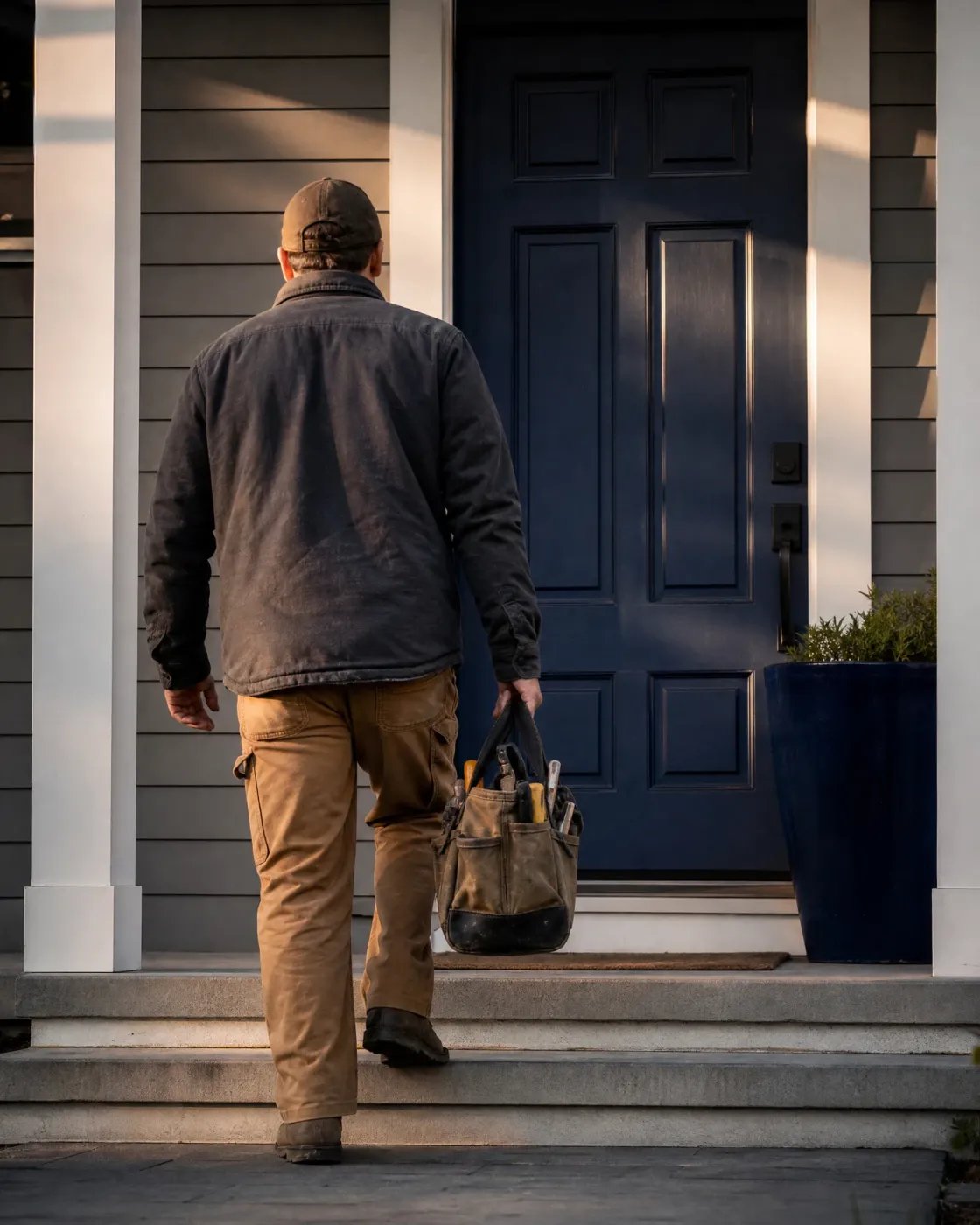
A man in a cap, dark jacket and tan work pants walks up concrete steps toward a dark blue front door, carrying a canvas tool bag at his side.
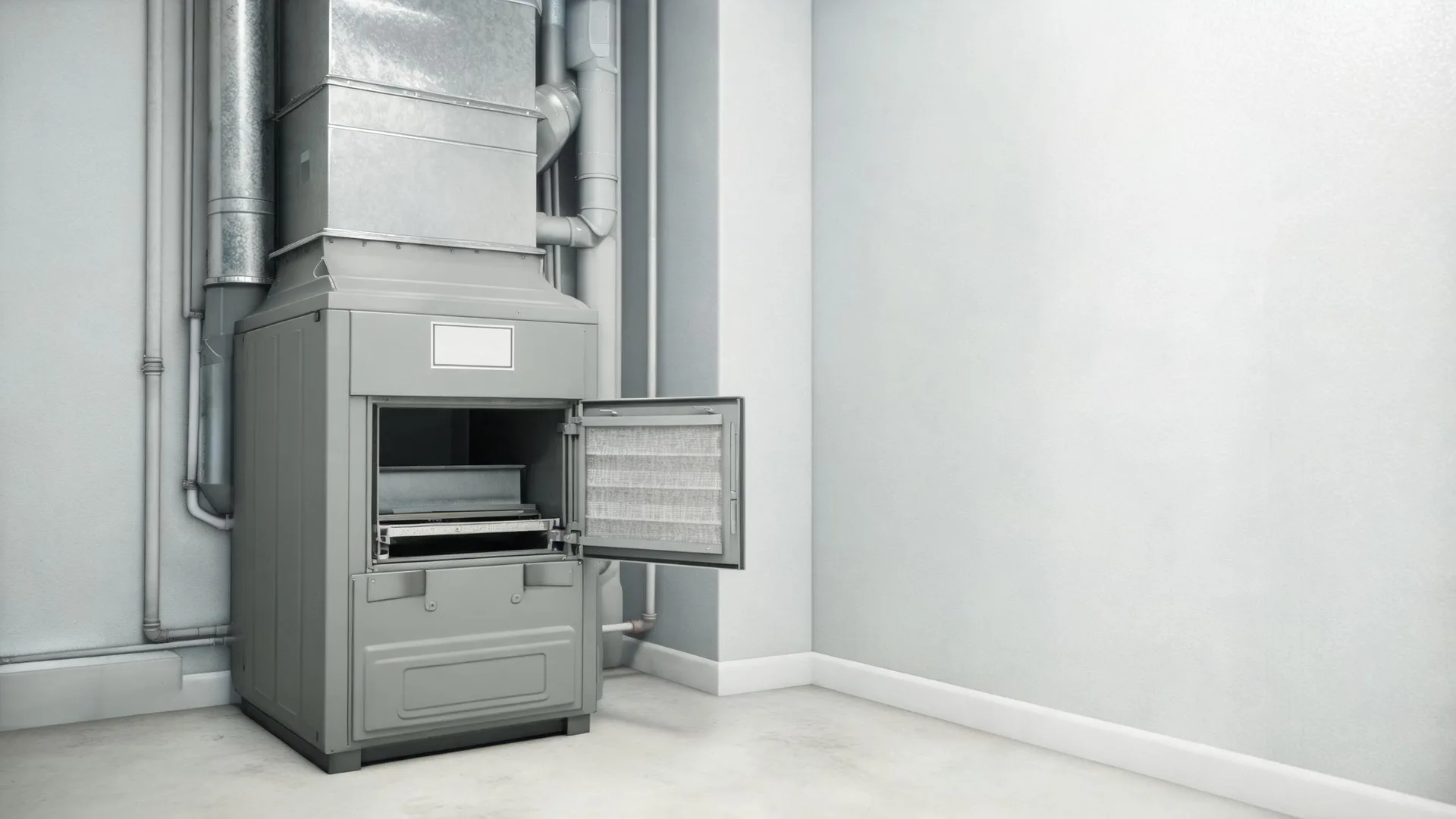
A gray residential gas furnace installed in an unfinished basement, surrounded by ductwork, a metal flue pipe, and a gas supply line.

A real tune-up opens the panels, not just the filter door

Some visits are a filter swap and a glance at the flame through the sight glass. That's not nothing, but it's not a tune-up. A thorough one pulls the panels and checks the heat exchanger with a light or a camera, because a crack there won't show up as a smell or a sound until it's already a problem. It tests gas pressure with a manometer instead of eyeballing the flame, since pressure can drift enough to matter before the flame looks wrong to the eye. It checks amp draw on the blower motor against what the motor is rated for, not just whether the blower turns on. A quick visit checks that the furnace runs. A thorough one checks that it's running the way it was built to.

The flame tells a story most people never see

A burner flame should burn steady and blue. Yellow or flickering means it's not getting the air mixture right, and that can mean incomplete combustion. Nobody watches the flame through a winter. A tune-up does, and it catches that before the symptom shows up anywhere else.
Amp draw catches a motor before it quits

A blower motor pulls more current as its bearings wear, long before it seizes or starts making noise anyone notices. Checking the draw against what the motor is rated for shows that wear while it's still just wear, not a dead blower in the middle of a cold snap.

Between visits, the filter is the one thing worth checking yourself. Hold it up to a light. If you can't see light through it, swap it. A clogged filter starves the burner of airflow and makes it cycle longer to push out the same heat, and that strain is exactly what a tune-up is trying to catch before it turns into a cracked heat exchanger or a dead blower motor. Keep the area around the furnace clear too. Boxes or stored items too close to it can block the air it needs to pull in and burn cleanly. If you ever smell something like rotten eggs near the furnace or the gas line, that's not a wait and see. Leave the house and call the gas company. Past the filter and keeping the space clear, leave the burner, the flame sensor and the venting to the yearly check. Those need a meter and a trained eye, not a homeowner with a flashlight.

A tune-up starts with the furnace off and the panels open. The heat exchanger gets checked for cracks. A cracked one can let exhaust mix into the air moving through the house. The burner comes next. The flame should burn steady and blue across every port, not yellow or lifting off the burner. The flame sensor gets cleaned, since a coated sensor makes the furnace shut off early or short cycle. The igniter gets looked at for wear. A cracked or weak one is a common reason a furnace won't light at all. The venting gets checked for blockage or corrosion, because exhaust has to leave the house, not back up into it. The blower gets tested against its rated draw, and belts or bearings get checked if the furnace has them. Gas pressure and electrical connections get tested last. Both drift slightly over time, and either one can throw off how the furnace runs without ever throwing an error code.