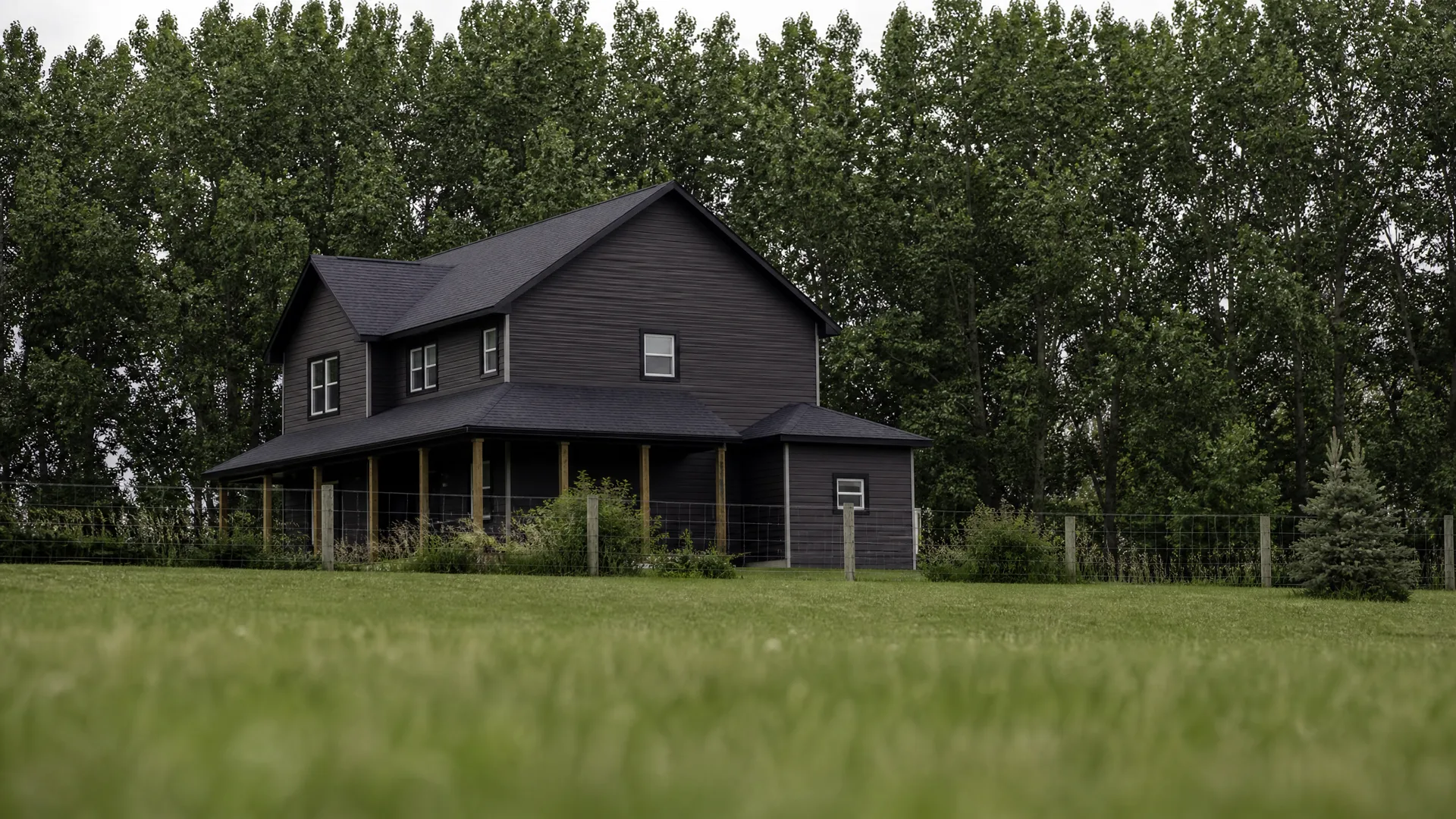
A dark-painted two-story wood-sided farmhouse with a wraparound porch and gabled roof stands behind a wire fence, backed by tall deciduous trees and fronted by a wide mown lawn.

Furnace Maintenance in Langdon, ND

Tell us about the job

Takes about a minute. No obligation.

Tune-up, service, or cleaningFurnace or heatingCavalier County, ND
Step 1 of 2

What ZIP code is the job in?

Half these homes date to 1968 or earlier

Half the furnaces in Cavalier County are heating a house built in 1968 or earlier. Nobody at this desk knows what's behind your walls or how your ductwork was run. That's something to check with whoever services it.


Older setups are worth a yearly look

A furnace that old has had more years to develop a weak igniter or a cracked heat exchanger than one installed last winter. A yearly check is when a contractor finds that kind of wear while it's still small.

A furnace that short-cycles, turning on and off before the house warms up, is working harder than it should.

A yearly check catches the flame sensor or airflow problem causing it before the blower motor wears out from the extra starts.

Nine months of heat starts in September. Have it looked at in August.

Heat runs September through May
Winter nights average 0°F
Climate zone 7

Furnaces in Cavalier County run from September through May, about nine months of the year. The hardest stretch falls in December, January and February, when the overnight low averages 0 degrees. A furnace carrying a house through cold like that for most of the year doesn't get much time to rest. Worn parts show up sooner on that kind of schedule than they would somewhere milder. By the time the season is in full swing, small wear has had months to turn into a real problem.

If your furnace is as old as half the ones here, get it looked at now

A furnace that's been in the house since 1968 has had decades to wear in ways a newer one hasn't. A yearly check is how a contractor finds a weak igniter or a cracked heat exchanger while it's still small, before another winter puts real strain on it.

Find a contractor
A gray high-efficiency gas furnace installed in an unfinished basement, surrounded by gas lines, a condensate drain, and sheet-metal ductwork.

What keeps running needs to stay clear

A clogged filter chokes airflow, and the blower has to push harder to move the same amount of heat through the house. That extra strain shows up in the motor, and in the heat exchanger behind it. Dust that gets past the filter settles on the coil and sits there like a blanket, holding heat where it shouldn't be. A clogged condensate drain, on a high-efficiency furnace, backs up and can shut the system down on its own as a safety measure. None of this is dramatic on its own. It just adds up faster during a season with no real break in it.

A real tune-up opens the cabinet

A thorough visit means pulling the burners to look at them, checking flame color, and pulling the blower to clean the wheel if it's caked with dust. It means testing the flue draft and checking the heat exchanger for cracks with a camera or a mirror, not just a glance. A quick visit is a filter swap and a glance at the thermostat. Both get called a tune-up. Only one tells you anything about what shape the furnace is in.

Ask what gets measured, not just touched

A contractor doing it right checks the gas pressure against the manufacturer's number and tests the limit switch and flame sensor instead of assuming they're fine. Amp draw on the blower motor tells you if it's straining. Without numbers written down, there's nothing to compare against next year, and no way to catch a part that's drifting toward failure before it quits.

A furnace that's never skipped a year doesn't fail less often by luck. Small wear gets caught and fixed before it turns into a breakdown. Skip enough years and the opposite happens quietly. A pilot or igniter that's been struggling a while finally stops lighting, usually on the coldest morning of the stretch, not a mild one. Bearings in a blower motor wear faster once they're starved of lubrication, and a motor running dry for months can seize instead of just getting noisy first. A cracked heat exchanger doesn't announce itself either. It's found with a camera during an inspection, not by any sound or smell a homeowner would catch in time.

A tune-up worth paying for follows a sequence, not a checklist ticked off in a hurry. It starts with the burners, pulled and inspected for a flame that burns even and blue rather than yellow or lifting off the burner tip. The igniter or pilot assembly gets tested under power, not just looked at, because a hot surface igniter can glow and still be too weak to light the gas reliably. The heat exchanger gets its own inspection, with a camera or mirror run through the chambers looking for hairline cracks that a flashlight from the front would miss entirely. Belts don't factor into this on most furnaces, since the blower motor drives the wheel directly, but the motor still gets checked for end play and listened to under load. The flue and venting get tested for draft, confirming exhaust is actually leaving the house and not spilling back into it. Gas pressure gets set against the manufacturer's spec, not eyeballed, because too high or too low changes how clean the furnace burns.