A two-story dark-clad house with white-trimmed windows and a low attached wing, set behind a wire fence and a wide grassy lawn with tall deciduous trees behind it.

Furnace Maintenance in Gwinner, ND

Tell us about the job

Takes about a minute. No obligation.

Tune-up, service, or cleaningFurnace or heatingSargent County, ND
Step 1 of 2

What ZIP code is the job in?

Electricity here runs $33.73 per million Btu

Most homes around Gwinner heat with electricity, and North Dakota's rate puts that cost right in front of you every month. A furnace that has to work harder to push out the same heat burns through more of it, and you pay for every bit.
A dirty or worn furnace draws more power to do the same job

A clogged filter, a dirty blower wheel, or a furnace that hasn't been checked in a while makes the system run longer to hold the same temperature. Out here, where the furnace runs most of the year and power isn't cheap to waste, that difference shows up on the bill.

Electricity heats 44.9% of homes in Sargent County, more than any other fuel, with bottled or LP gas close behind at 33%.

A gas or LP furnace needs its burner, venting and safety controls checked, not just a new filter.

Nine months of heat means worn parts don't stay quiet for long

Heat runs September through May
Winter nights average 5°F
Climate zone 6A
September starts itHeat runs September through May here. Have the furnace looked at in August.

Get the furnace looked at before September, not after. A tune-up catches a cracked heat exchanger, a weak igniter, or a blower wheel caked with dust while the system is sitting idle. Once the thermostat gets set for the season and the furnace is running daily, any of those turn into a cold house and an electric bill that climbs for no good reason. Nine months of straight work doesn't leave much room to put it off until something quits.

A furnace running clean costs less to run

A tune-up gets the furnace back to pushing heat without a fight. Out here that's most of the year, on electric rates that charge for every extra minute the system runs to make up for a dirty filter or a worn part.

Find a contractor
A gray gas furnace with attached ductwork and piping installed in an unfinished concrete basement.

Small parts, worked hard

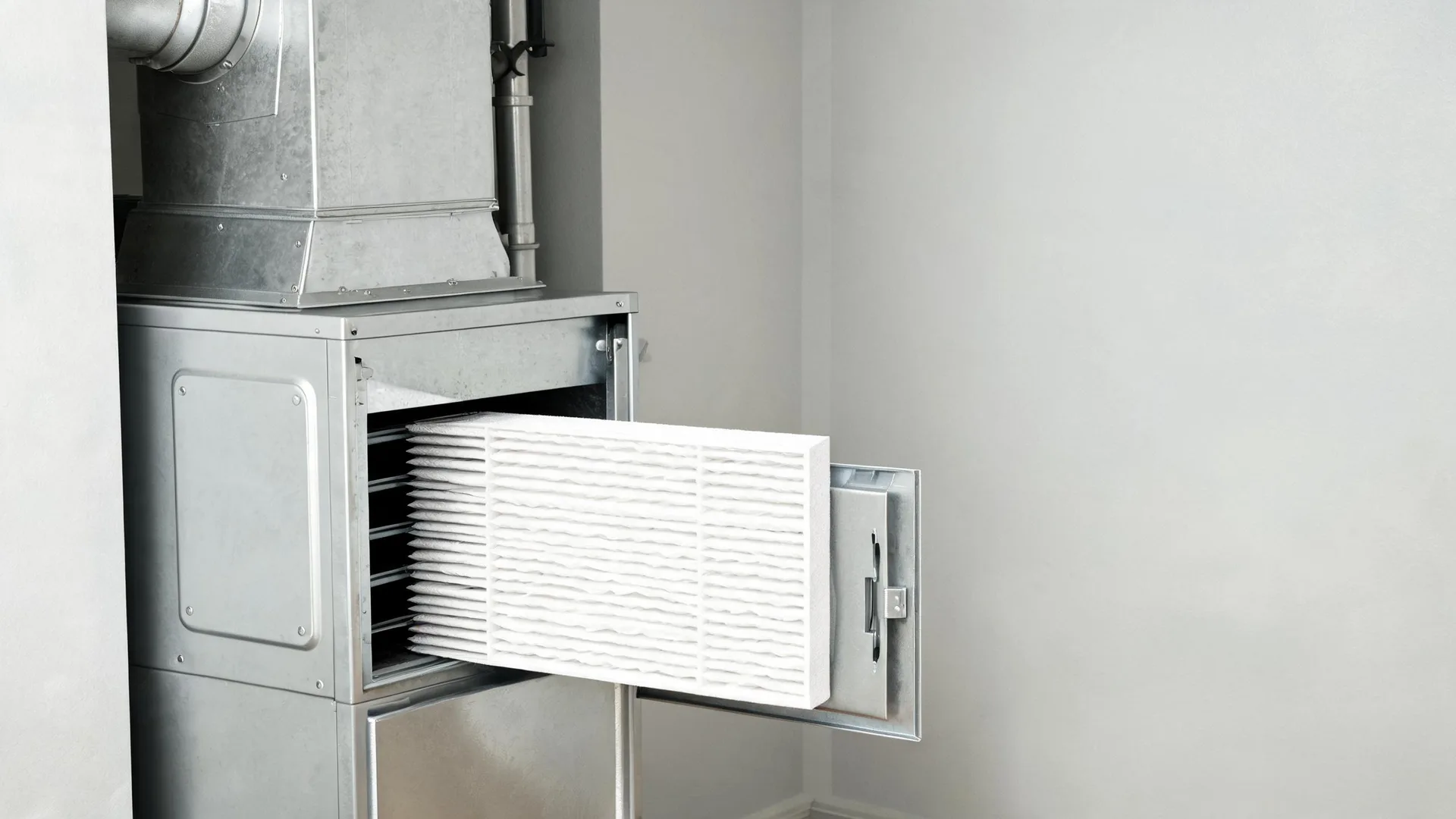
A furnace pulls air through a filter before it ever reaches the heat exchanger. Once that filter loads up with dust, the blower has to work harder to move the same amount of air through it. Airflow drops, the heat exchanger runs hotter than it should, and the burner cycles longer to reach the temperature on the thermostat. Left long enough, that heat can crack the exchanger itself, which is not a part anyone wants to replace mid-winter. The blower wheel tells a similar story. Dust builds up on the blades over time and throws them out of balance, so the motor strains to push the same air and wears faster than it should. A furnace with a condensing system also has a drain line carrying off the water that condensation produces, and if that line clogs or kinks, the furnace will shut itself down rather than risk an overflow. None of these parts fail on their own schedule. They fail from running dirty, cycle after cycle, for as long as the furnace is asked to keep a house warm.

Small problems don't stay small

A furnace that loses its spark on the igniter, or starts a crack in the heat exchanger, doesn't fix itself by running. Each cycle after that makes the wear a little worse. What starts as a part working harder than it should ends as a part that quits outright, usually on the coldest night it's asked to work hardest.

A no-heat call finds the backlog

When a furnace fails without warning, the fix competes with every other furnace that failed the same week for the same reason. A tune-up catches the worn igniter or the clogged line before it picks its own time to fail, and puts the repair on a schedule set by you instead of the weather.

A furnace usually tells you before it quits. Short cycling, where it fires up, runs a few minutes, and shuts off before the house warms, often points to a dirty flame sensor or a clogged filter choking airflow. A burner flame that burns yellow instead of blue means it's not getting the right mix of air and gas, and that's worth a look regardless of how the furnace is heating. Rattling, squealing, or a knocking sound when the blower starts usually means a bearing or a loose part, not something that gets better on its own. A furnace that runs longer than it used to, or kicks on more often to hold the same temperature, is already working harder than it should. Any smell of gas, even faint, means stop using it and get it checked before doing anything else.

An electric furnace and a gas furnace don't get the same tune-up. On an electric furnace, the work centers on airflow and the heating elements: checking the elements for wear, testing the sequencer or relays that bring them on in stages, and making sure the blower wheel and motor are clean and turning freely. There's no burner, no flame, no venting to check, because there's no combustion happening. A gas or LP furnace adds the burner assembly, the flame sensor, and the heat exchanger to that list, since those are the parts that can put exhaust where the house air is if something's wrong. The igniter gets tested either way it's built, since a weak igniter is behind a lot of no-heat calls that look random. Loose electrical connections get tightened on any furnace, because a loose one generates its own heat and wears faster. The list isn't the same for every furnace, but it's the same for every furnace of its kind, because those are the parts that fail.