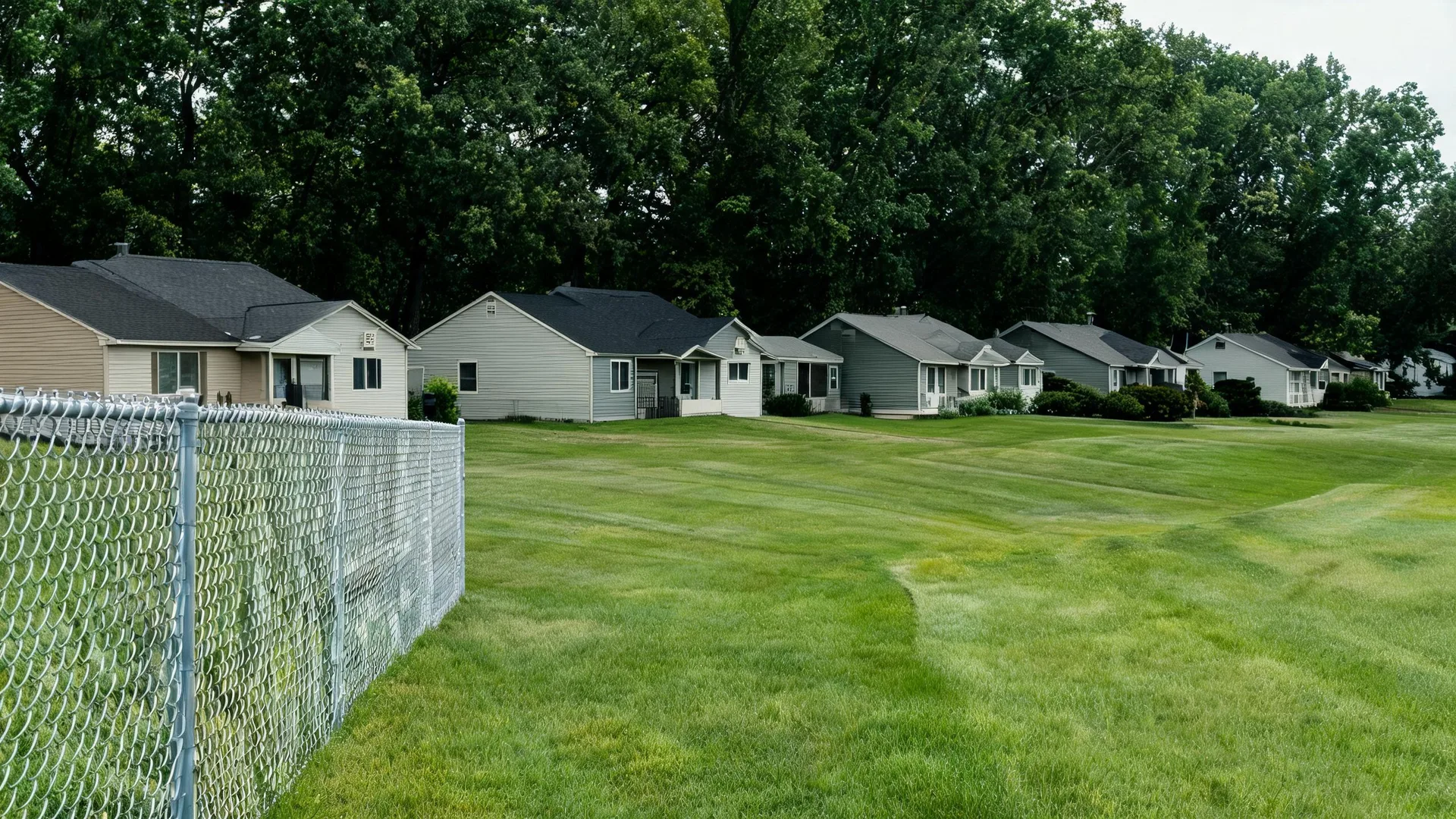
A mowed grass field bordered on the left by a chain-link fence, with a row of single-story houses and tall deciduous trees behind them under an overcast sky.

Furnace Maintenance in Crosby, ND

Tell us about the job

Takes about a minute. No obligation.

Tune-up, service, or cleaningFurnace or heatingDivide County, ND
Step 1 of 2

What ZIP code is the job in?

Half these homes date to 1963 or earlier

Divide County's homes split right down the middle at that year. A house that old has likely had its furnace replaced at least once, but whatever is running now has had time to collect wear on the igniter, the blower motor or the heat exchanger.


Older systems fail with less warning

A furnace that has logged a lot of winters does not always give you a sign before something goes wrong. A yearly check is what catches a cracked heat exchanger or a worn blower bearing while it is still a small fix.

Furnaces in Divide County run from September through June.

Ten months of work a year wears down an igniter or a blower motor faster than in most places.

September starts ten months of heat. Have it checked in August.

Heat runs September through June
Winter nights average 3°F
Climate zone 7

A quick visit gets the furnace running and leaves. Someone swaps the filter, glances at the flame, and calls it done. A thorough one takes it apart. The burners get pulled and cleaned, because soot buildup changes the way they burn. The flame sensor gets scraped clean, not just looked at, since a thin film on it is what causes random shutoffs later in the season. The blower wheel comes off its housing so the dust packed between the blades can be cleared out, because that buildup throws the wheel off balance and wears the motor bearing. The heat exchanger gets inspected with a light and a mirror, looking for hairline cracks, not just a glance through the access panel. Someone also checks the gas pressure at the manifold and tests the limit switch, since both can drift out of range without ever throwing an obvious fault. If the visit took less time than changing the oil in a car, it was the quick kind.

Catch it while it's small

If your system has been in the house a long time, a yearly check is how you catch problems while they're small.

Find a contractor
A man in a gray t-shirt and tan work pants, seen from behind, climbs concrete steps toward a dark blue front door while carrying a canvas tool bag, with a potted shrub beside the entry.
A gray high-efficiency gas furnace installed in an unfinished basement, surrounded by gas lines, a condensate drain, and sheet-metal ductwork.

What's wrong doesn't always show

A clean furnace can still be hiding something. Dust and soot don't always keep a flame from lighting, so a burner that fires every time can still be burning uneven and leaving carbon behind where you can't see it. A gas valve can hold a pressure that's drifted a little high or a little low for a long time before it causes a no-heat call. A pressure switch can be wired right and still be reading a hose that's partly blocked with condensation. None of that shows up when the furnace kicks on and blows warm air. It shows up when someone pulls the burners, checks the manifold pressure against the rating plate, and runs the inducer to see if the switch responds the way it should. The furnace doesn't tell you any of this on its own. It just keeps running until the thing that was drifting finally gives out.

Skipped service adds up quietly

A furnace that never gets opened up keeps running on a dirty flame sensor, a slightly off gas pressure, a blower wheel caked with dust. None of that stops the furnace from lighting. It just means the motor works harder than it should and the burners run less clean than they should, winter after winter.

The failure shows up at the worst time

When neglect catches up to a furnace, it tends to happen on the coldest night, not a mild one. A blower motor with a worn bearing seizes under load. An igniter coated in residue finally stops glowing hot enough to light the gas. These are the nights the furnace is working hardest, which is exactly when a weak part gives out.

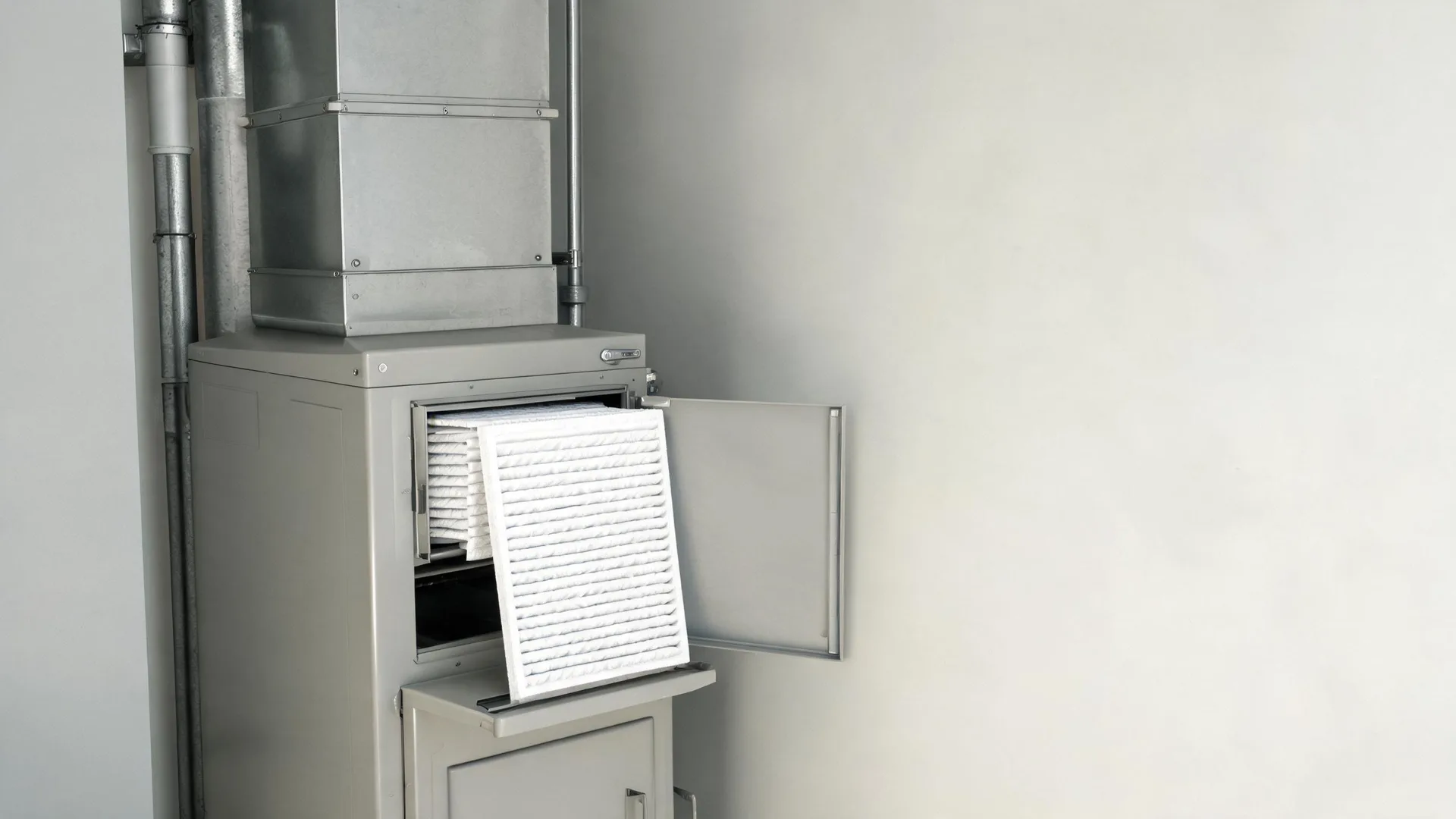
The filter is the one part a homeowner can check without taking anything apart. A furnace pulls air across the burners and through the heat exchanger with the same blower that pushes air through the house. A filter packed with dust makes that blower work harder to move the same amount of air, and that strain shows up as a motor running hotter and longer than it should. If this furnace shares a cabinet with an evaporator coil, a dirty filter lets dust settle straight onto the coil fins. A coil caked in dust can't transfer heat the way a clean one does. The condensate drain gets forgotten for a different reason. It only matters once it has already failed. A drain line clogged with algae or sediment backs water up into the furnace instead of carrying it outside, and on a high-efficiency furnace that water sits close to the control board and the inducer motor.

Between visits, the filter is the main thing worth a homeowner's attention. Check it monthly and swap it when the light doesn't pass through easily, since a clogged one is what drives most of the strain covered above. Keep the area around the furnace clear too. It needs room to pull air in, and anything stacked against the cabinet gets in the way of that. Walk past the vent pipe outside once in a while and make sure nothing is blocking it, no nest, no snow packed against the cap. Beyond that, leave the inside alone. The burners, the flame sensor, the blower wheel, those are a tech's job, not because the steps are secret but because doing it wrong can crack something or leave a part seated badly. Listen for anything new, a rattle, a burning smell that doesn't fade after the first few minutes, a flame that looks yellow instead of blue. Those are the signs worth a call between scheduled visits.