




A snow-covered suburban street at dusk with lit houses and bare trees under a twilight sky.

Furnace Maintenance in Cooperstown, ND

Tell us about the job

Takes about a minute. No obligation.

Tune-up, service, or cleaningFurnace or heatingGriggs County, ND
Step 1 of 2

What ZIP code is the job in?

Electricity in North Dakota runs $33.73 per million Btu, among the higher rates in the country. A furnace that's skipping maintenance works harder to put out the same heat, and every bit of that extra work shows up on the bill. A dirty flame sensor or a clogged filter makes the burner cycle longer and more often to reach the same temperature on the thermostat. None of that is visible day to day. It just shows up as a higher number each month, all winter, until someone checks the parts that cause it.

Furnaces in Griggs County start working hard in September, the first month heat goes on.

August is the month to get yours checked, before it has to carry the full load.

Most of Cooperstown heats with electricity, but more than a third runs on LP gas

46.9% of homes heat with electricity
Heat runs September through May
Winter nights average 2°F

Half the houses in Griggs County were built in 1958 or earlier. A furnace that old has likely been replaced at least once, but whatever's in there now is working inside ductwork and a house built for an older, different heating setup. That's not a problem by itself. It's just a reason not to assume the system is fine because it ran fine last year. A yearly check catches a cracked heat exchanger or a failing igniter while it's still a small repair, before it turns into a furnace that won't start on the coldest morning of the year.

A tune-up pays for itself here

A neglected system uses more power, and power costs more here. A tune-up pays for itself.

Find a contractor
A man in a cap, gray long-sleeve shirt and tan pants walks up stone steps toward a dark blue front door, carrying a waxed canvas tool bag in his right hand.
A gray gas furnace with attached ductwork and piping installed in an unfinished concrete basement.

A yearly check, not a guess

Put the furnace on a yearly schedule, before the season starts. If the house dates back to 1958 or earlier, ask whoever services it how old the unit itself is and when the heat exchanger was last looked at. That's on record after a check. It isn't after a winter of just running the thing.

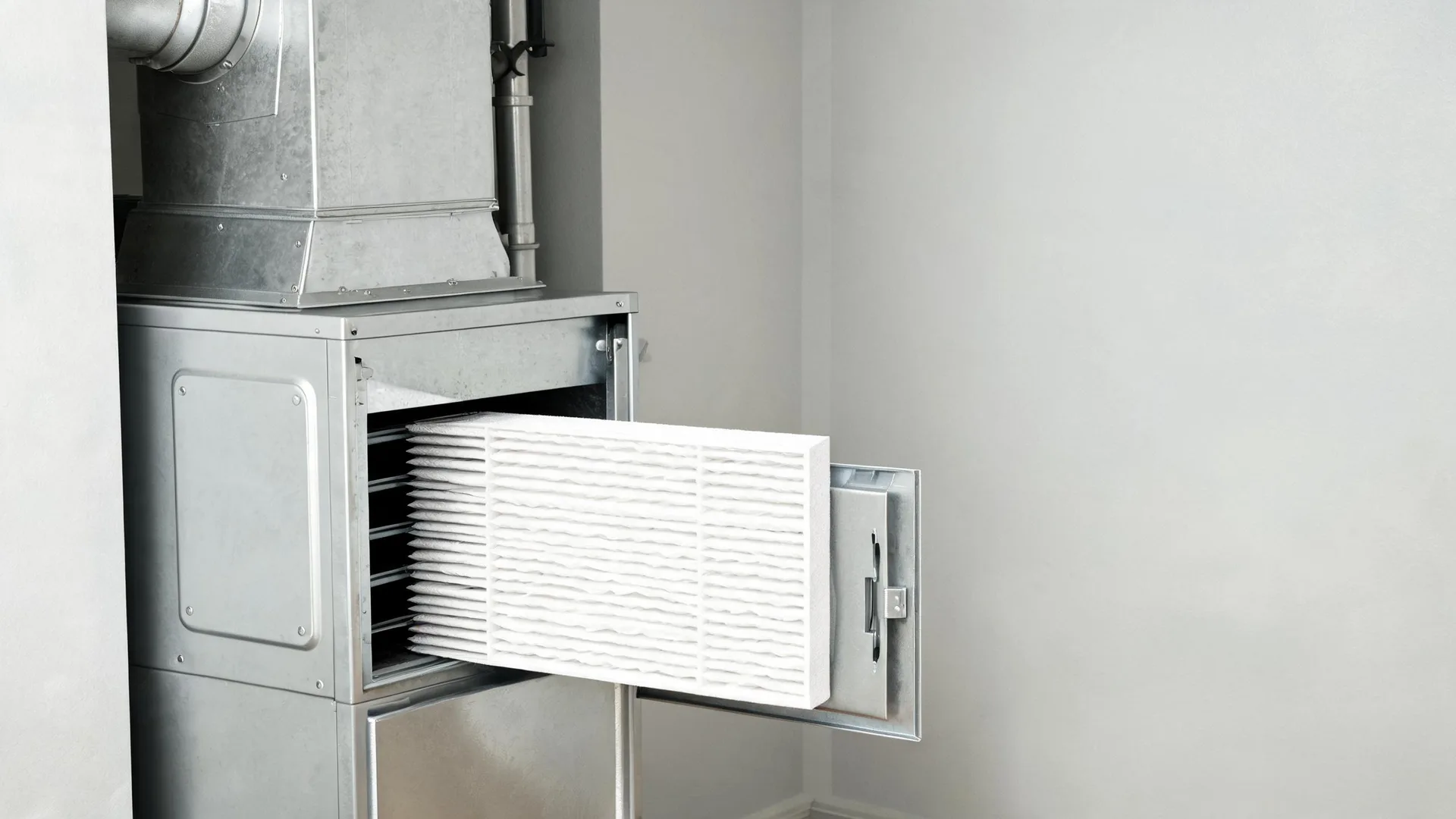
Change the filter yourself

A dirty filter is the one thing between visits that's really on you. Pull it and hold it up to a light. If light doesn't pass through, swap it. A furnace breathing through a clogged filter runs longer to push the same heat through the house, and that strain is what wears out a blower motor early.
Know what's not yours to touch

Leave the burner, the heat exchanger and the gas line alone. Those need a trained eye and the right tools to check safely. What you can do is watch for soot near the vent hood, a burner flame that looks yellow instead of blue, or a smell of gas, and get someone out if you notice any of it.

A furnace gives warnings before it quits outright. The burner flame should be steady and blue. If it's flickering or turning yellow, the burner isn't getting the air it needs to burn clean. Listen for a bang at startup, that's gas building up before it lights instead of catching right away. A blower that runs longer than it used to, or kicks on and off more than it should, is working harder to move the same air. Short cycling, where the furnace starts and stops without really warming the house, usually means a part is telling it to shut down before it should. Any of these is worth a call before the cold sets in, not after.

A tune-up is a set sequence, not a once-over. The technician pulls the burner assembly and cleans it, because dust and lint buildup is what turns a blue flame yellow. The flame sensor gets cleaned or swapped, since a coated sensor is the most common reason a furnace shuts off seconds after starting. They check the heat exchanger for cracks, which matters because a cracked exchanger can let combustion gases mix into the air the blower pushes through the house. The igniter gets tested under load, not just looked at, since igniters often read fine cold and fail once they heat up. They check the blower motor and wheel for dust buildup that makes it work harder to move the same air, and confirm the gas pressure is set correctly so the burner gets the fuel mix it was built to run on. Every one of those is a part that fails quietly, then fails all at once.