


A snow-covered residential street at twilight with illuminated houses, bare trees, and an orange horizon glow beneath a deep blue sky.

Furnace Maintenance in Carrington, ND

Tell us about the job

Takes about a minute. No obligation.

Tune-up, service, or cleaningFurnace or heatingFoster County, ND
Step 1 of 2

What ZIP code is the job in?

Furnaces in Foster County run from September clear through May, close to nine months of the year. That is most of the calendar spent heating a house against overnight lows that average 3°F in December, January and February. A furnace working that many cold nights puts real hours on its igniter, its blower motor, its heat exchanger. Parts that might last longer somewhere milder wear down faster under that kind of load. By the time the first cold snap hits, you want to already know the furnace is ready for it, not find out it isn't.

Furnace season in Foster County starts in September.

Have it checked in August, before it has to run.

Have it looked at before September, while there's still no rush. A technician can catch a cracked heat exchanger or a weak igniter while the furnace is sitting idle, not during the first cold week when you need the heat on. A tune-up means a clean filter, a blower that's been checked, a burner that lights right every time, before nine months of hard running start. Skip it and the furnace tells you what's wrong on its own, usually on a night near 3°F.

Know your furnace is ready, not hoping it is

Half the homes in Foster County were built in 1973 or earlier. If your house is one of them, the furnace has likely been swapped out at least once since, maybe more. A yearly check gives you a record of what shape it's in, so you're not guessing each fall whether this is the year something gives out.

Find a contractor
A man in a gray shirt and tan work pants, seen from behind, climbs porch steps toward a dark blue front door while carrying a canvas tool bag, with a potted shrub to the right.
A gray high-efficiency gas furnace installed in an unfinished basement, surrounded by gas lines, a condensate drain, and sheet-metal ductwork.

A real tune-up means hands on the parts that fail

A quick visit gets you a filter swap and a glance at the flame. That's it. A thorough one puts hands on the parts that actually fail. The technician pulls the burners and cleans them, checks the flame sensor for the thin coating that builds up and keeps it from sensing a flame at all, and tests the draft so exhaust is actually leaving the house instead of backing up. They check amp draw on the blower motor against what it's rated for, not just whether it spins. They open the heat exchanger access and look for cracks or rust-through, because that's the part that can put combustion gas where your return air is. None of that happens during a quick filter change. If the technician is packing up before you've had a chance to ask a question, something got skipped.

Change the filter yourself

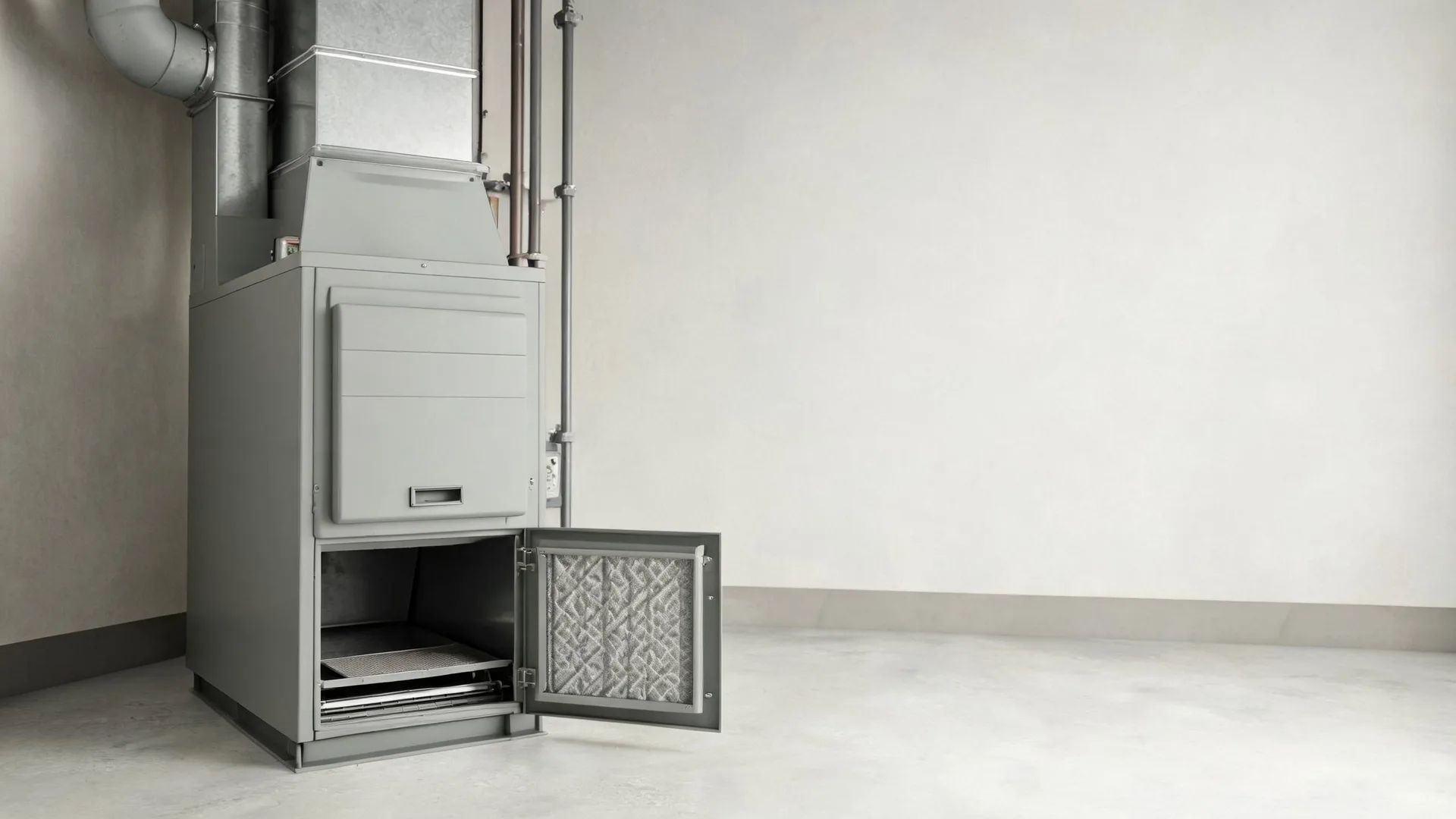
A dirty filter is the one thing you can check without taking anything apart. Pull it and hold it up to a light. If you can't see light through it, swap it. A clogged filter starves the furnace of airflow, which makes the heat exchanger run hotter than it should and makes the blower motor work harder than it was built to.
Know what's not yours to open

Leave the burner compartment and the heat exchanger alone. Those need a trained eye to tell a hairline crack from normal wear, and a wrong guess there is a safety problem, not a repair job. What you can do is watch for soot near the vent hood, a burner flame that looks yellow instead of blue, or a smell when the furnace kicks on, and get those looked at instead of waiting for the next visit.

A furnace usually tells you something is wrong before it quits outright. A burner flame that used to light with a soft thump now takes a few extra seconds, or lights with a bang. That delay means the igniter or the flame sensor is on its way out. Short cycles, where the furnace fires up and shuts off again before the house warms at all, point to a flame sensor that's coated over or a limit switch tripping early. A blower that used to come on quiet and now rattles or squeals is running on a motor or a bearing that's wearing out, not just making noise for no reason. Any of those is worth a look before the part fails on a night you need the heat.

A tune-up has a set order because each step depends on the one before it. The technician shuts off gas and power first, then pulls the burners to clean them, since a burner caked with dust lights unevenly or not at all. Next comes the flame sensor, checked for the thin film that keeps it from telling the control board a flame is lit, which is what causes a furnace to fire for a few seconds and quit. Then the blower wheel gets inspected for dust buildup, because a dirty wheel moves less air even when the motor is working fine. The heat exchanger gets a visual check for cracks or rust, since that's the barrier between combustion gas and the air going into the house. Last comes the control board and wiring, checked for anything loose or corroded that could cause a short cycle or a failure to start. Each step catches something the others cannot.